REVIEW · CUSCO
Zipline over the Sacred Valley Trip
Book on GetYourGuide →Operated by XPLORA AMERICA · Bookable on GetYourGuide
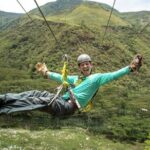
The Sacred Valley feels different at 100 kph. This zipline over the Sacred Valley trip pairs a high-speed 4-zipline circuit with big aerial views, plus a Tibetan bridge challenge that tests your nerve. I like how the staff focus on making you feel safe and capable, and I also like the clear sense of speed and height right above the canyon and valley. The one thing to consider is that the rides move fast and you’ll be up high, so if heights scare you, plan to take the first seconds slow.
You’ll start with a pickup at Regocijo Square in Cusco, then ride about 40 minutes to the activity area near Raqchi. The total time on the ground is about 270 minutes, and you’ll be back at the meeting point roughly 4.5 hours after pickup. Most of the guiding and instruction is in English (with Spanish also available), which helps a lot when you’re trying to focus instead of panic.
If you’re looking for value, this one has it: transfers are included, the circuit is four separate cables with specific lengths, and the instructors seem genuinely patient with first-timers. In one standout experience, the driver named Eloy also shared local culture and Quechua-related context on the drive, which turns a simple transfer into part of the day.
In This Review
- Key things to know before you go
- Cusco Pickup To Raqchi Adventure Base: How the Day Flows
- The 4 Zipline Circuit Over the Sacred Valley Canyon (430–600 m)
- Tibetan Bridge Challenge: Why It Feels Different From Zipline
- Safety, Instructor Support, and That First-Minute Courage
- Timing and Transfers: What 270 Minutes Actually Means
- Price and Value at $49: What You Get for the Adrenaline
- Who This Zipline Trip Fits Best (And Who Might Think Twice)
- Photos, Small Moments, and Getting the Most From Each Run
- Should You Book This Zipline Over the Sacred Valley Trip?
- FAQ
- Where is the pickup location?
- How long is the tour?
- How many ziplines are included?
- What are the zipline cable lengths?
- Is a Tibetan bridge challenge included?
- Are transfers included in the price?
- Are the instructors available in English?
- How much does it cost?
- Are there additional expenses?
- Can I change my plans?
Key things to know before you go
- Regocijo Square pickup in Cusco keeps the start simple and easy to find.
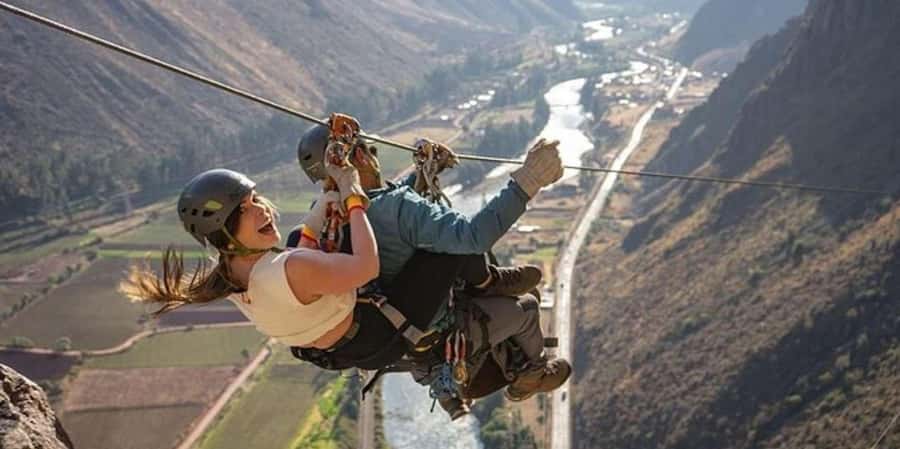
- Four ziplines with long cables (up to 1970 feet / 600 m) make the adrenaline last.
- Big canyon and Sacred Valley views are the point, not just the backdrop.
- Tibetan bridge challenge adds a different kind of nervous energy than the zipline.
- English-speaking instruction helps if your Spanish is limited.
- Support for first-timers seems to be a real priority, including reassurance for those who hesitate.
Cusco Pickup To Raqchi Adventure Base: How the Day Flows
This tour is built around a clean, no-fuss rhythm. You choose a starting time, and you’ll be picked up from Regocijo Square in Cusco. Then you’ll head out by minibus or bus for about 40 minutes to the Raqchi area, where the adventure activities happen.
That drive matters more than you’d think. At altitude, Cusco mornings can feel like they move at a different pace, and the short ride gives you time to wake up, catch your breath, and get mentally ready. One passenger even credited the driver, Eloy, with adding extra context about the area and local culture, including Quechua-related topics. Even if your driver isn’t Eloy, the transfer tends to be more than dead time.
Once you arrive, the activity zone is where the day speeds up. You’ll get instruction from an English-speaking team, and you’ll start with the zipline circuit. After you finish, you hop back into the minibus and return to Cusco.
The 4 Zipline Circuit Over the Sacred Valley Canyon (430–600 m)
The main event is a circuit of four ziplines. What I like about a multi-line circuit is that it gives you a build-up: the first ride teaches you how it feels, and the later rides turn that feeling into pure momentum.
Here are the four cable lengths you’ll fly on:
- 1410 feet (430 metres)
- 1470 feet (450 metres)
- 1570 feet (480 metres)
- 1970 feet (600 metres)
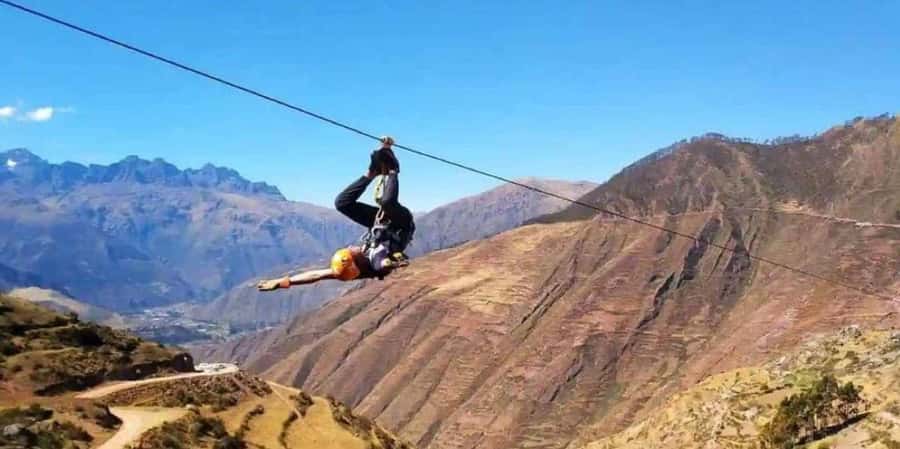
That last one is the headline. A 600-metre run isn’t subtle. It’s the kind of distance where you stop counting seconds and start noticing the valley below in layers: canyon walls, the Sacred Valley spread out in front of you, and mountain ridgelines framing the route.
You’re not just riding over ground-level scenery. You’re going above it, with open sightlines, so even quick glances feel like real sightseeing. A few people highlighted the views and the overall excitement, and you can expect that mix of adrenaline and awe.
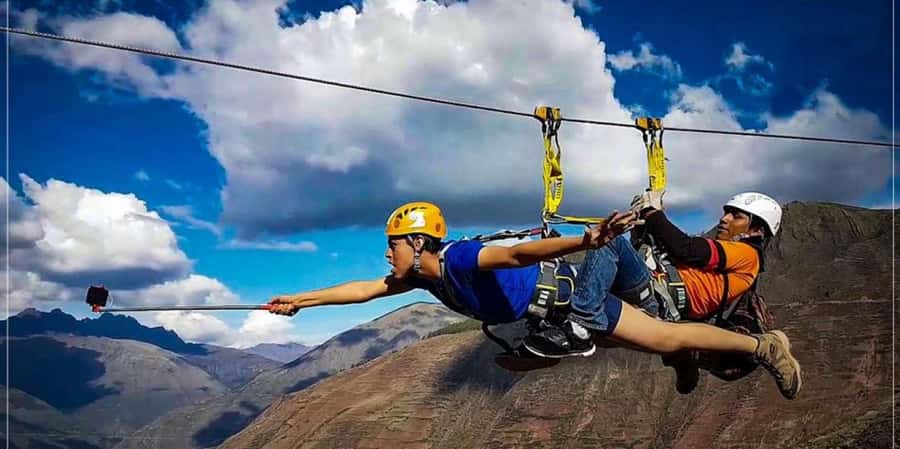
One added detail from a review: one rider said they had the chance to try a position called the Condor during the ride. They described it as feeling more like flying. That’s not something I’d count on as guaranteed for everyone, but it suggests the staff are comfortable helping you experiment with how you position your body during the flight.
Tibetan Bridge Challenge: Why It Feels Different From Zipline
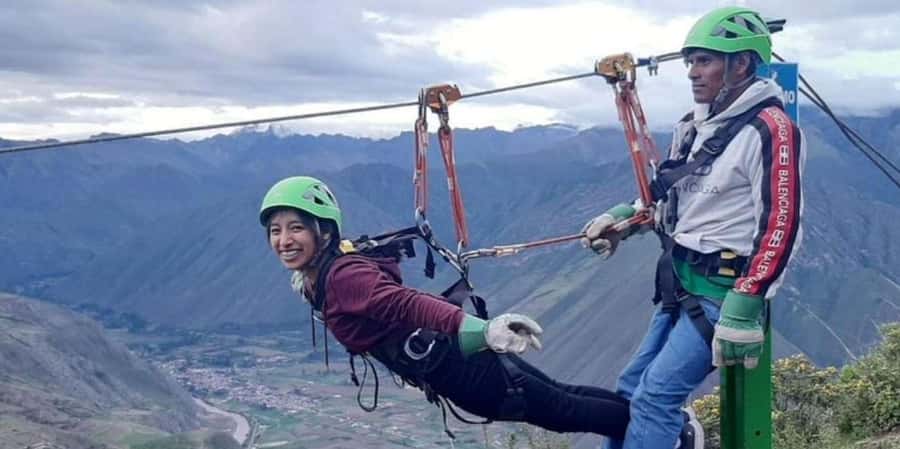
The Tibetan bridge challenge is listed as part of the experience highlights, and it adds a different flavor of challenge than the ziplines. On a zipline, your motion is continuous and guided by cables. On a bridge, your body has to decide moment by moment what to do with balance and distance.
That shift is exactly why I think it’s worth doing. It turns the day from pure adrenaline into a more complete “confidence-builder” combo. You’ll likely be switching gears: first you fly over the valley, then you test yourself at ground height—except the ground is moving, uneven, or at least feels exposed.
If you’re nervous about heights, this is still manageable, but your mindset should be different. Don’t treat it as a warm-up to the zipline. Treat it like its own activity with its own pace. The instructors’ job here is reassurance and control, and reviews point to staff who are patient and willing to help when someone hesitates.
Safety, Instructor Support, and That First-Minute Courage
The best thing about this trip, in my view, is the way the instruction is described by people who were genuinely worried at the start. Multiple reviews emphasize that the team felt safe and professional, and that instructors worked to build confidence rather than rush you through.
In one experience, staff encouraged courage by waiting for you to get ready and, when needed, even going with riders who couldn’t do it on their own. That tells me the team is watching the human side of the activity, not just the technical side.
I also like that there’s English-speaking support. Zipline instruction has a lot of short commands and safety points, and if you understand them clearly, you can relax faster. With Spanish also available, you’re more likely to find someone who can explain things your way.
A practical tip: treat the first cable as the calibration round. Your job is to learn how your body responds at speed and height. Once you trust that, the later runs tend to feel smoother and more fun.
Timing and Transfers: What 270 Minutes Actually Means
The stated duration is 270 minutes, and the day’s structure is basically:
- pickup in Cusco
- about 40 minutes of travel to the activity area
- zipline circuit (four cables) plus the Tibetan bridge challenge
- return transfer back to Regocijo Square
That means you’re not stuck out there for an entire day. You’re also not doing “quick and forget it” either. The pacing is built for a real chunk of activity time while still staying within a half-day window.
The return time is especially helpful for planning. You’ll arrive back in Cusco about 4 hours 30 minutes after pickup. If you like to keep your afternoons open for exploring streets, markets, or viewpoints, this format supports that.
One thing to remember: Cusco timing can be sensitive. Plan to show up with enough buffer around the pickup so you don’t start the adventure stressed. A relaxed start makes the first zip feel like fun instead of a test.
Price and Value at $49: What You Get for the Adrenaline
At $49 per person, the value here comes from what’s included rather than what’s optional. Your ticket covers:
- minibus or bus transfers
- English-speaking instructors
- the circuit of four ziplines
When you break it down, you’re paying for a full experience package: transportation from Cusco, staff support, and a multi-run zipline format with specific long cable lengths. In other words, you’re not just paying for one quick ride.
People also seem to feel the price matches the effort. Comments describe it as fast, but worth it, especially because the staff make riders feel comfortable. That’s a big deal in activities like this, where confidence affects how much you enjoy it.
One note on costs: extra expenses are not included. The exact extras aren’t listed here, so the safest approach is to bring a little extra cash or card for whatever comes up on-site.
Who This Zipline Trip Fits Best (And Who Might Think Twice)
This is a great fit if you want:
- real views over the Sacred Valley (not just a short run over a small area)
- a multi-line zipline circuit with long cables
- structured support from an instructor team
- an extra challenge in the form of the Tibetan bridge
It’s also a good choice for first-timers in ziplining. The repeated theme in reviews is patient guidance and confidence-building. That matters because first-timer fear is normal, and you shouldn’t have to “power through” alone.
If you’re the type who hates being up high, has panic attacks in exposed spaces, or can’t handle height and speed, then you should consider whether you’ll enjoy it or just endure it. The staff support helps, but the activity itself still involves altitude feeling and forward motion.
A smart approach: go with an attitude of learning rather than proving. If you keep your focus on the instructor cues and your breath, the whole circuit is much easier to enjoy.
Photos, Small Moments, and Getting the Most From Each Run
Zipline days are made of photos, whether you mean to or not. One review specifically mentions asking the staff to take pictures, and the team handled it without any trouble. That suggests the instructors are ready to help capture the experience as long as you request it.
I recommend treating photos as a bonus, not a distraction. Your first goal should be to get comfortable on the platform, listen carefully, and follow instructions. Once you’re flying, enjoy it. Then if there’s time and you want pictures, ask the team.
Also, if you want the most out of the views, look early. The valley opens up gradually as you settle into speed, so early attention can turn a quick ride into a lasting memory.
Should You Book This Zipline Over the Sacred Valley Trip?
I’d book it if you want a structured half-day adventure that blends long zipline runs with a separate nerve challenge on the Tibetan bridge. The included transfers and English-speaking instruction make it easier than DIYing anything similar, and the circuit format means you get multiple flights rather than one highlight moment.
I’d hesitate if you’re strongly afraid of heights or speed, because the activity is built around flying over a canyon and staying in motion. Even with supportive instructors, the physical reality doesn’t change.
If you’re somewhere in the middle, this tour is exactly the kind of place where confidence can grow fast—especially if you take the first cable as practice and let the instructors do their job.
FAQ
Where is the pickup location?
Pickup is from Regocijo Square in Cusco.
How long is the tour?
The duration is 270 minutes, and you’ll return about 4 hours 30 minutes after pickup.
How many ziplines are included?
You’ll do a circuit of 4 ziplines.
What are the zipline cable lengths?
The circuit includes cables of 1,410 feet (430 m), 1,470 feet (450 m), 1,570 feet (480 m), and 1,970 feet (600 m).
Is a Tibetan bridge challenge included?
Yes, a Tibetan bridge challenge is part of the highlighted activities.
Are transfers included in the price?
Yes. Minibus or bus transfers are included.
Are the instructors available in English?
Yes. English-speaking instructors are included, and the live tour guide is available in English and Spanish.
How much does it cost?
The price is $49 per person.
Are there additional expenses?
Extra expenses are not included, so you may need to cover any on-site extras yourself.
Can I change my plans?
You can cancel up to 24 hours in advance for a full refund, and you can reserve now & pay later.