REVIEW · DAYTONA BEACH
Zipline Adventure through Tuscawilla Park
Book on Viator →Operated by Daytona Beach Zipline Adventure · Bookable on Viator
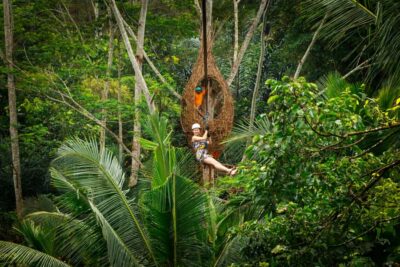
Trees, ropes, and speed over Daytona. This 2.5-hour zipline adventure through Tuscawilla Park is interesting because you do two aerial obstacle courses plus multiple ziplines, and I love the mix of swinging bridges, hanging logs, tight wires, and zipline runs. I also like the calm, patient guide style people describe from instructors such as Roger, Neil, Carlos, and Skyla. One consideration: if you (or someone in your group) is very uneasy with heights, the pace can slow and you may spend more time waiting on the ground.
Your day starts at the harness house where you sign in, get fitted, and go through safety coaching in a demo area before you climb. The whole thing is aimed at people with at least moderate fitness, and you’ll need sneakers and a minimum height of 54 inches. After you finish, you’ll get light refreshments, plus bottled water and chips are available for sale.
In This Review
- Key highlights you’ll care about
- Harness House Check-In and the Demo That Sets You Up
- What to do right when you arrive
- Course 1: How the 10 Obstacles and 300-Foot Zipline Will Feel
- A small-group reality check
- A Short Ground Break: Water, Chips, and Resetting Your Legs
- Course 2: 30 Obstacles, 6 Ziplines, and the 500-Foot Runs
- When Course 2 feels toughest
- Staff support is part of the experience
- Height, Harness Confidence, and Why Footwork Matters
- Guides and Group Pace: Getting What You Need
- Who This Zipline Adventure Fits Best
- Who might want to reconsider
- Value: Two Courses, Real Distance, and a Full 2.5-Hour Workout
- Should You Book This Daytona Zipline Adventure?
- FAQ
- FAQ
- How long is the zipline adventure?
- What courses will I do?
- What are the height and footwear requirements?
- Is there safety training before I start?
- How large is the group?
- Where do I meet, and where does it end?
- Is free cancellation available?
Key highlights you’ll care about
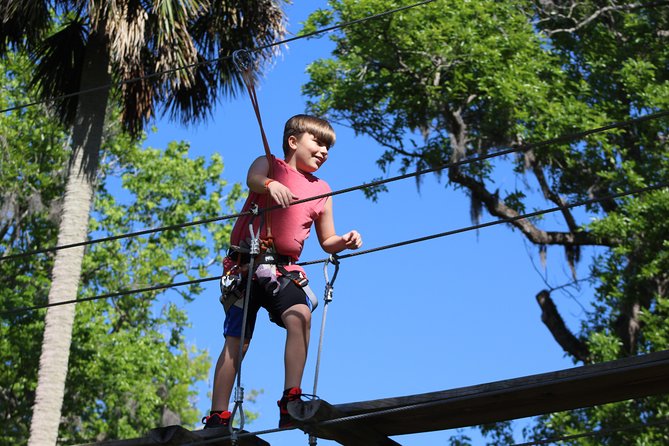
- Two obstacle courses back-to-back: Course 1 (10 obstacles, 4 ziplines) then a short break, then Course 2 (about 30 obstacles, 6 ziplines)
- Zipline lengths scale up fast: longest about 300 feet on Course 1, then up to about 500 feet on Course 2
- Safety coaching before you start: you’re taught how to be safe at the demo area before going into the main courses
- Smaller group size (up to 25): more attention from staff while you’re clipped in and moving across obstacles
- Active, not just flying: there are obstacles like swinging bridges and tight wires that work your legs and core
- Snacks and water after: light refreshments plus bottled water/chips for sale when you’re done
Harness House Check-In and the Demo That Sets You Up
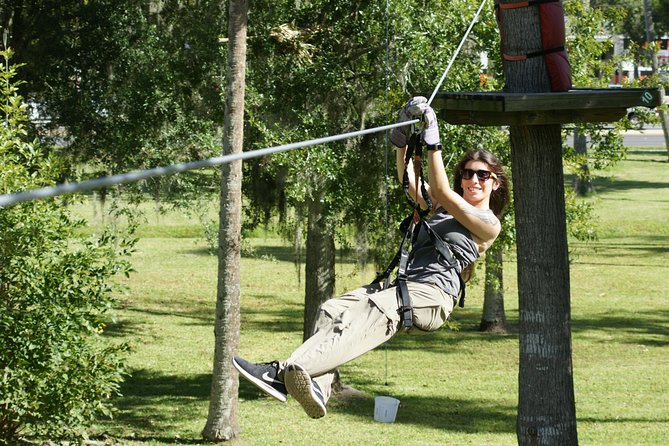
You meet at Daytona Beach Zipline Adventure by TreeTop Trekking, 1000 Orange Ave, Daytona Beach, FL 32114. The experience starts right where you can get the gear on quickly: you’ll sign in, then head to the harness area to get fitted. This is a big deal. A good harness fit and clear instructions make everything that follows feel more predictable.
Before you go up into the courses, you’ll do a safety demo in a separate area. In plain terms, this is where you learn how the system works and how to move while clipped in. If you’ve never done this type of aerial course, don’t try to muscle through it based on instinct. The demo is there so you know how to handle transitions between obstacles, how to position yourself for the next element, and how to stay calm while you’re elevated.
You’ll also see how the staff operates. The setup described for this adventure includes staff members staying on the ground and monitoring your progress. That means you’re not alone up there if you run into trouble, and it also helps explain why the experience can run in a smooth flow for most groups.
What to do right when you arrive
- Wear sneakers. Closed-toe shoes help with grip on platforms and with your comfort while you’re clipped in.
- Assume you’ll get warm. The course is shaded by trees, but you’re still moving and exerting yourself for about 2.5 hours total.
Course 1: How the 10 Obstacles and 300-Foot Zipline Will Feel
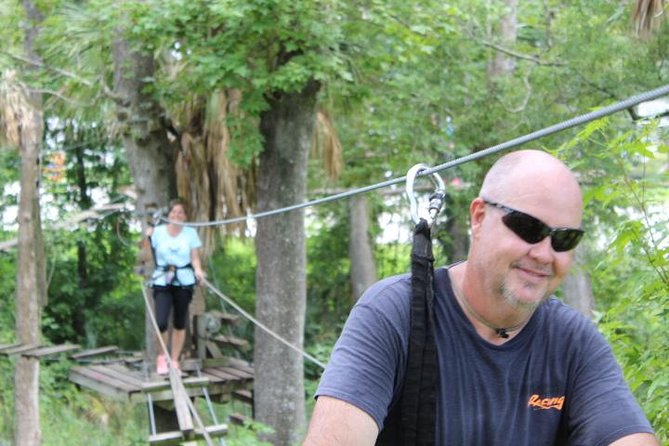
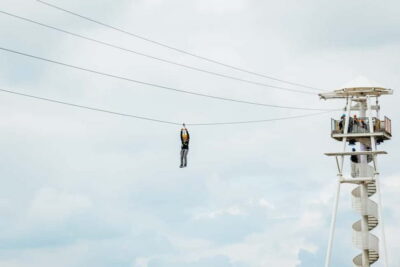
Course 1 begins around 15 feet up and rises to about 30 feet high. You’ll tackle 10 obstacles total and cross 4 ziplines as part of this first section. The longest zipline on this course is about 300 feet, so even the “starter” round has real distance—not just a quick hop.
The obstacle mix matters because it changes your focus. One moment you’re dealing with a platform-to-platform move, and the next you’re handling a zipline. Along the way you may encounter elements like swinging bridges, hanging logs, and tight wires. Those details are the reason this feels more like a climbing adventure than a single thrill ride.
I like Course 1 because it acts like a training wheel for your nerves and your body. You get a chance to learn your rhythm: how you clip in, how you shift your weight, and how you keep moving even when something looks awkward from the ground. Many people find their confidence ramps up after the first couple of transitions—especially once they realize the harness and coaching are designed to keep you progressing safely.
A small-group reality check
This is capped at 25 travelers, which should help. Still, your pace depends on the whole group. If someone needs extra time on an obstacle, you may feel it in the timing. The upside is that staff are on the ground watching, so slowdowns are usually about support and safety—not chaos.
A Short Ground Break: Water, Chips, and Resetting Your Legs
After Course 1, you come back down for a brief break. This pause is smart. Your legs and grip get used during the obstacles, and the break helps you switch from endurance-mode into focus-mode again before Course 2.
What’s available during this reset? The adventure includes bottled water, and chips are offered for sale. Reviews and highlights also point to light refreshments when you’re done, so plan to take advantage of the snack/water moment rather than forgetting to refuel.
This break is also the time to decide how you’ll approach the rest of the day. If you’re nervous, this is your chance to mentally reset before the higher, longer course begins. If you’re feeling good, it’s also the time to hydrate and keep your energy steady.
Course 2: 30 Obstacles, 6 Ziplines, and the 500-Foot Runs
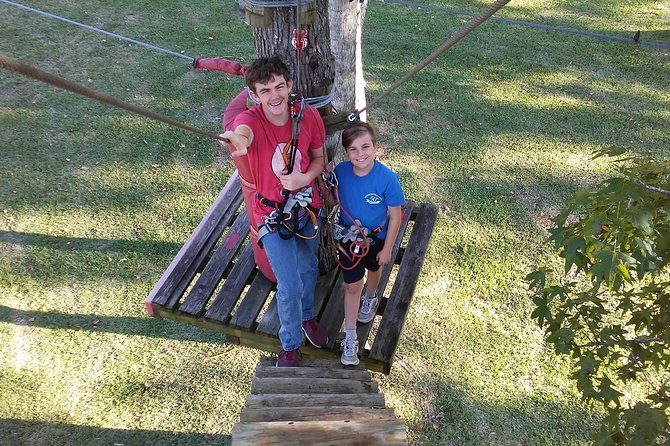
Course 2 starts around 20 feet up and climbs to about 45 feet high. This is the “bigger” half of the adventure: about 30 obstacles and 6 ziplines. The three longest ziplines on Course 2 each run about 500 feet.
That upgrade is the core reason to do the full experience, not just the first course. Course 2 pushes your comfort with height and your stamina on the ground-to-air-to-ground transitions. The longest runs are where you really feel the speed and distance, but it’s the obstacles between ziplines that keep the day active.
You’ll likely handle more complex route changes too. The course includes obstacles like swinging bridges, hanging logs, and tight wires—so you’re not just sitting still between ziplines. Plan for a real workout. Your core and legs get involved on the platforms, and your upper body has to stabilize you while you manage the next clip-in point.
When Course 2 feels toughest
There are a couple moments that can feel more technical than they look from the ground. One review notes that some participants find specific setup steps challenging, including getting into a low position to hook up to a line and then moving back to a standing stance. That doesn’t mean you’ll struggle, but it’s a heads-up: keep calm, follow staff guidance, and don’t rush your body into the next position.
Staff support is part of the experience
Because staff monitor from the ground, you’re not left guessing if something doesn’t go as planned. Still, like any group aerial activity, the pace can be affected if someone gets stuck mid-line or needs extra help. If you’re in a rush, plan to arrive with a little buffer so you can enjoy the day instead of watching the clock.
Height, Harness Confidence, and Why Footwork Matters
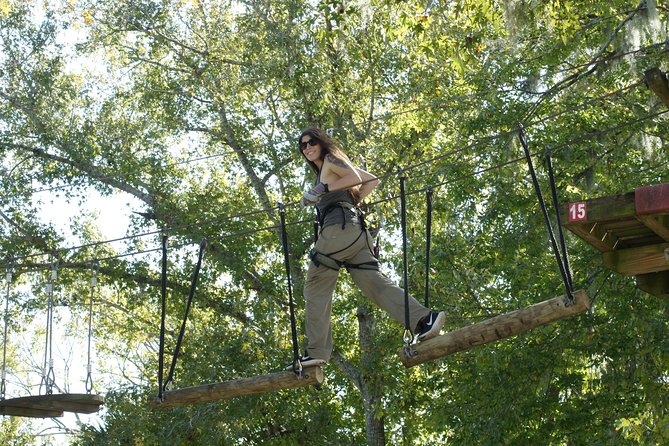
Aerial courses sound simple until you’re up there. Height affects your brain even when your body is ready. The best advice I can offer is this: treat the course like a sequence of tasks, not one big scary moment.
The harness system and the coaching help, but your own choices matter too. Keep your focus small:
- Move one connection at a time.
- Don’t fight the obstacle—use it. If something swings, time your move.
- Keep your feet ready for the platform. Sneakers help with grip and balance.
You may notice that some people feel more comfortable in the trees than they expect, even if they dislike other heights. That makes sense. The feel is different when you’re in a wooded setting with natural support points and when your path is designed to keep you moving safely.
If heat is a factor, this is a good reason to consider an earlier slot when possible. One review mentions that the experience can get hot, while trees provide some shade. In other words: hydrate, wear breathable clothing under your harness, and take the water break seriously.
Guides and Group Pace: Getting What You Need
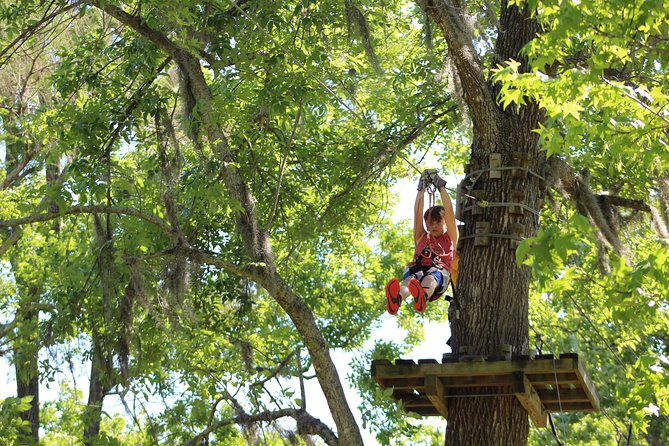
The guide experience seems to be a standout part of this adventure. Names that came up include Roger, Neil, Carlos, and Skyla, and the consistent theme is patience and encouragement—especially for participants working through fear of heights or learning the course for the first time.
That matters because the course is physically demanding, but it’s also mentally demanding. A patient guide helps you understand what comes next. Calm instruction can turn a scary obstacle into a doable step.
At the same time, keep expectations realistic. The adventure includes multiple obstacles and a pair of courses that together take about 2.5 hours. That’s plenty of time for confidence to grow, but it’s also enough time that group pacing can influence your experience. If you’re the kind of person who gets distracted by waiting, go in with a flexible mindset.
If you’d like photos, here’s a helpful nuance from the experience: one guide (Skyla) took pictures and shared them after the run. You might not get the same level of photo help every time, but it’s a good reason to ask if souvenirs are possible.
Who This Zipline Adventure Fits Best
This is best for people who want an active, outdoors challenge with real structure and clear safety coaching. The minimum requirement is 54 inches tall, and everyone needs sneakers. The activity is described for travelers with moderate physical fitness.
Here’s the practical match:
- Families with teens and older kids who can handle climbing-like movement and listening to instructions.
- Friends or couples who want a shared challenge, not just a quick attraction.
- First-timers who are willing to follow safety guidance and take the demo seriously.
Who might want to reconsider
If you have strong fear of heights and you know you freeze when you’re up high, you might find this harder than you want. The course can feel slow if the group includes participants needing extra time, and higher sections of Course 2 demand more comfort.
Also, if you’re expecting a day filled with constant flying only, note that both courses include obstacle work between zip lines. You’ll be climbing, balancing, and moving across structures the whole time.
Value: Two Courses, Real Distance, and a Full 2.5-Hour Workout
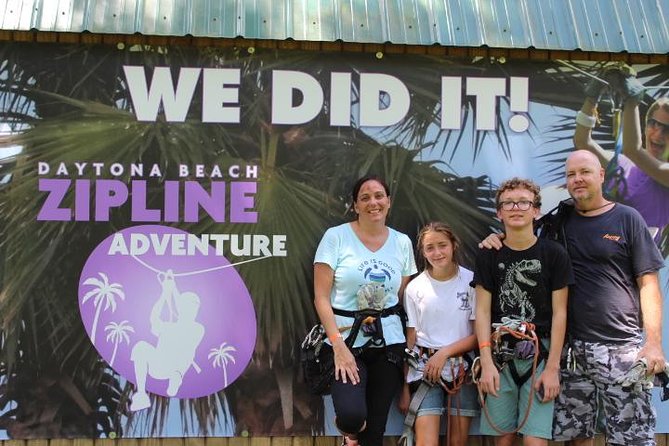
You don’t just buy a zipline here—you buy time in the air and time doing the obstacles. The structure is part of the value:
- Course 1: 10 obstacles + 4 ziplines, reaching up to about 30 feet, with a longest run around 300 feet.
- Course 2: about 30 obstacles + 6 ziplines, reaching up to about 45 feet, with three longest runs around 500 feet.
That mix means you get variety. You’re not stuck on the same platform type or repeating the same zip line. Course 2 adds both height and length, which keeps the experience from feeling like you’re doing the same thing twice.
And the time adds up. About 2.5 hours gives you enough repetitions to feel like you did something meaningful—especially if you consider the workout aspect. One review even calls out that Course 2 can be a serious workout. Even if calories aren’t your goal, you’ll likely feel it in your legs and grip by the end.
Should You Book This Daytona Zipline Adventure?
If you want an outdoors activity that blends zipline thrill with climbing-style obstacles, this is a strong choice. The two-course format, the clear safety demo, and the staff staying on the ground all point to a structured adventure that’s built for learning as you go.
Book it if:
- You meet the 54-inch minimum and can wear sneakers comfortably.
- You’re okay with a real physical challenge and don’t need everything to be effortless.
- You want a day that builds confidence from Course 1 into the bigger runs of Course 2.
Think twice if:
- Heights make you shut down completely, or you know you need a very calm, slow pace to feel safe.
- You’re hoping for a mostly hands-off ride with minimal obstacle movement between zip lines.
FAQ
FAQ
How long is the zipline adventure?
The full experience takes about 2 hours 30 minutes.
What courses will I do?
You’ll do two aerial obstacle courses. Course 1 includes 10 obstacles and 4 zip lines, with a longest zip line of about 300 feet. Course 2 includes about 30 obstacles and 6 zip lines, with three longest zip lines of about 500 feet each.
What are the height and footwear requirements?
Everyone must be at least 54 inches tall and should wear sneakers.
Is there safety training before I start?
Yes. You’ll be greeted, sign in, get into your harness, and then you’ll be taught safety and how to be safe in the demo area before going on the courses.
How large is the group?
The maximum group size is 25 travelers.
Where do I meet, and where does it end?
Meet at Daytona Beach Zipline Adventure by TreeTop Trekking at 1000 Orange Ave, Daytona Beach, FL 32114. The activity ends back at the meeting point.
Is free cancellation available?
Yes. You can cancel up to 24 hours in advance for a full refund.