REVIEW · WEST VIRGINIA
Tree Tops Zip Line Canopy Tour
Book on Viator →Operated by Adventures on the Gorge · Bookable on Viator
A hemlock canopy and a long final zip in WV. Tree Tops Zip Line Canopy Tour blends real instruction with big views above Mill Creek, plus a mix of short flights and longer ones. You’ll glide through an endangered hemlock forest and cross sky bridges that put you high over the area.
What I like most is the training before you fly. You’ll gear up, walk to a practice zip, learn positioning and braking, then demo the skills in a low-risk way before joining the main line. The guides also make it feel calm and human. In particular, names like Bri and Chloe show up in the standout feedback for being professional and fun, and Madison and Elisa are praised for helping a nervous guest relax and succeed.
One consideration: you do need to meet the physical requirements and limits. Expect a moderate fitness level day with time on your feet, and there’s a weight range of 90–260 pounds plus a minimum age of 10. If you’re outside those limits, you won’t be able to go.
In This Review
- Key things to know before you go
- Price and value: what $115.39 buys you
- Getting geared up: harness, helmet, and a real skills lesson
- The main canopy run: from a 190-footer to a 640-foot finale
- Mill Creek sky bridges: the views that make the thrill feel worth it
- How safe it feels (and why the guides get praised)
- What to expect during the in-between parts: hike and shuttles
- Weather and footwear: small choices that prevent big discomfort
- Who this tour fits best (and who should skip it)
- Photos and souvenirs: how to plan for the memory
- A realistic rundown of the day’s timing
- Should you book Tree Tops Zip Line Canopy Tour?
- FAQ
- What is the duration of the Tree Tops Zip Line Canopy Tour?
- How much does the tour cost?
- What’s included in the price?
- Are there age or weight requirements?
- What should I wear?
- Where does the tour start and end?
Key things to know before you go
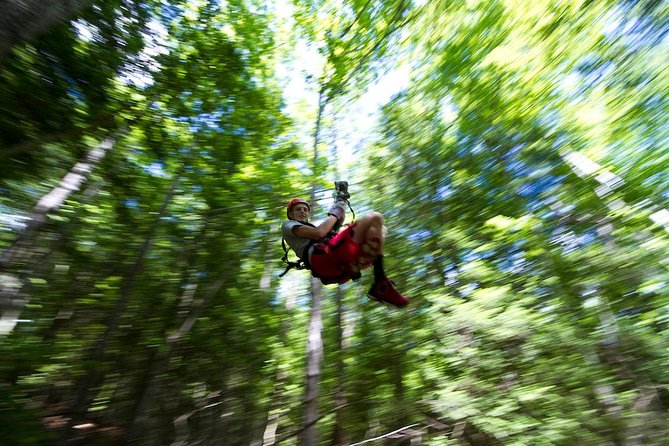
- Endangered hemlock forest canopy: you’ll zip through the trees, not just over a park.
- Practice zip first: learn braking, stopping, zip positioning, and line attainment before the main run.
- Six zip lines total: including a 640-foot longest final line and an end rappel to the ground.
- Sky bridges over Mill Creek: first a 205-foot bridge, then more bridge crossings for variety.
- Small group size: up to 6 travelers, which helps the coaching feel personal.
- Guides who manage nerves: multiple guides are highlighted for making first-timers feel safe and ready.
Price and value: what $115.39 buys you
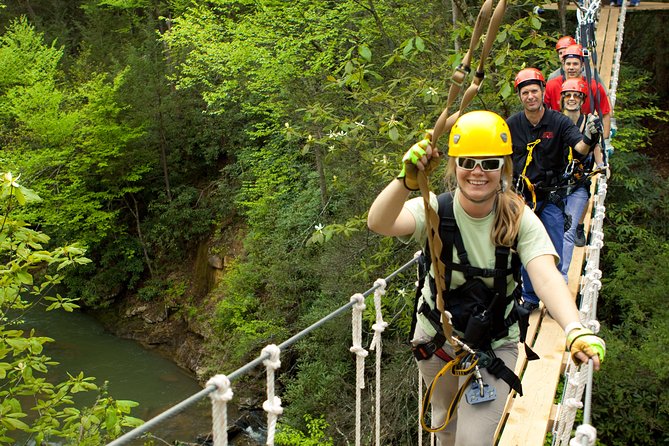
At about $115.39 per person for roughly 3 hours, this tour sits in the mid-range for a guided zip line experience. What makes it feel like good value is what’s included: a professional guide, helmet, harness, and gloves, plus the taxes, fees, and handling charges. You’re not paying extra to learn the system or to be properly equipped.
Another value point: you’re doing a true canopy course, not a single bragging zip. You get a multi-line route with sky bridges, a 640-foot finale, and a rappel finish. If you’re going to spend a chunk of your vacation doing one adrenaline activity, this one has the right mix of variety and time.
Photos are available to purchase, but those aren’t included. If you want a keepsake, plan for that additional cost ahead of time.
Getting geared up: harness, helmet, and a real skills lesson
Your experience starts with meeting your guides and getting fully set up. You’ll put on a full-body harness, plus a helmet and gloves. It’s not just put-on-and-go. The tour is built around instruction.
Then you’ll walk to the practice zip. This is where the day changes from exciting idea to controlled skill. The coaching focuses on:
- zip positioning
- braking and stopping
- line attainment
Once the guides explain what to do, you’ll demonstrate the skills in a low-risk environment. For first-timers, this is the part that matters most. It turns the whole day into something you can participate in rather than something you merely endure.
From the feedback, the best days happen when guides take the nervous energy seriously. That’s why the standout mentions of Madison, Elisa, Ed, and Jay matter. Their job isn’t just safety checks; it’s helping you understand what’s happening while you’re doing it.
The main canopy run: from a 190-footer to a 640-foot finale
After practice, you’re into the canopy course. Expect multiple stages that keep you from feeling like you’re repeating the same few seconds again and again.
Here’s the flow, in plain language:
- A 190-foot zip to start things off.
- Four more zip lines, each between 230 and 590 feet long, so you get both quick thrills and longer stretches.
- Cross above Mill Creek via a 205-foot sky bridge to reach another platform.
- Continue with a run that includes a triple set of sky bridges, adding repeated platform-to-bridge transitions (not just one long line after another).
- After that, you come back to the ground and hike to the road.
- A short shuttle brings you to the longest final zip: 640 feet.
- Finish by rappelling down from the platform back to the ground.
- Then another short shuttle takes you back to the resort, with a complimentary beverage.
What I like about this structure is pacing. You’re not all peak fear, all the time. You build confidence, you get different lengths to feel the range of speed and time, and the sky bridge moments change the view rhythm. The hike and shuttle segments also break up the adrenaline loop, which keeps the day from turning into one long blur.
Mill Creek sky bridges: the views that make the thrill feel worth it
The sky bridge portions are where the scenery tends to land. You’re high above Mill Creek, and crossings like the 205-foot bridge give you a wider sense of distance and direction. The course also includes more bridge sets after the first crossing, which means you’ll have more than one moment where you look across rather than just down.
This matters because zip lines can turn into a blur if you focus only on speed. The bridges force a slight change in attention: you look outward, you notice the tree canopy beneath and around you, and you get that satisfying mix of height and control.
Also, the course runs through an endangered hemlock forest. That doesn’t just sound impressive. It gives your ride extra meaning. You’re moving through a place that’s more than a backdrop, and it makes the whole activity feel less like a generic amusement park line.
How safe it feels (and why the guides get praised)
Safety here isn’t just the gear. It’s the sequence.
You get instruction, you practice, and you demonstrate skills in a low-risk setting. Then you move into the real course. That reduces the odds that someone freezes at the wrong moment, because everyone has already seen the basics and worked through them with a guide nearby.
This is also where the guide praise connects to real-world comfort. People mention feeling at ease right away with guides like Bri and Chloe. They also describe fear-to-confidence progress with Madison and Elisa. That pattern tells me the guides are paying attention to emotional readiness, not only physical readiness.
So if you’re the person in your group who worries about heights, don’t assume you have to be fearless to go. The tour’s structure is designed to teach you what to do, and the feedback repeatedly points to guides helping first-timers relax without rushing.
What to expect during the in-between parts: hike and shuttles
Not every second is a zip. After the bridge-heavy section, you’ll come back to ground and hike to the road, then take a short shuttle to the final 640-foot platform.
That matters for two reasons:
- You should expect some walking on uneven ground as part of the adventure.
- Your body needs to be ready for a change from seated harness time to upright movement, even if it’s not long.
The upside is that those breaks also reset your focus. After you’ve done several lines, you’re not constantly thinking about the next launch immediately. You get a breather before the big finale.
Weather and footwear: small choices that prevent big discomfort
You’ll be required to wear close-toed shoes, like sneakers or hiking boots. Don’t show up in sandals, flip-flops, or anything slippery.
Even if the tour is short, you’ll be wearing gear and moving around before you fly. Good shoes make the whole day feel more stable, which can calm nerves fast.
As for weather, the tour duration is about 3 hours, and it’s outdoors. If you’re traveling in WV shoulder season, you might find conditions change quickly. Dress in a way that keeps you comfortable while you’re standing, gearing up, and walking between points.
Who this tour fits best (and who should skip it)
This is a strong fit if:
- you want a guided first zip line experience rather than doing it on your own
- you like a course with multiple lengths and sky bridge crossings
- you have a group and you want it to feel personal (max 6 travelers)
- you’re traveling with mixed ages, as long as everyone meets the minimum age of 10
It may not be the right fit if:
- you can’t meet the 90–260 pound weight requirement
- you’re unable to handle a moderate physical effort day that includes walking/hiking between sections
- you want a hands-off thrill that never includes practice or skill demo (this tour includes training)
Photos and souvenirs: how to plan for the memory
There’s an option to purchase souvenir photos after the tour. If you’re hoping to capture the big finale moment, consider budgeting for that. It can be a nice way to turn a blur of adrenaline into something you can actually look back on.
Also, since photos aren’t included, don’t assume your ticket price covers the keepsake.
A realistic rundown of the day’s timing
This tour is listed as about 3 hours. With morning or afternoon departure times offered daily, you can often pick a slot that works with the rest of your WV plan.
That flexibility matters because zip lines are weather- and scheduling-sensitive. If you have other activities lined up, choose a departure time that leaves buffer space afterward for food or a scenic stop.
In terms of intensity, the day builds. You start with a shorter first flight, then move into longer lines and bridge crossings, then finish with the 640-foot final and a rappel.
Should you book Tree Tops Zip Line Canopy Tour?
Book it if you want a guided zip line where the focus is both fun and confidence, not just speed. The practice zip, skill demo, and small group size are exactly what you want if you’re nervous or new to zip lining. And the route through an endangered hemlock canopy with sky bridges over Mill Creek gives you more than one kind of thrill.
Skip it if you don’t fit the age (10+) or weight (90–260 pounds) limits, or if you know you won’t handle the moderate physical effort involved with gearing up and hiking between sections.
If you’re on the fence, here’s the simple test: if you’d enjoy learning the basics first and then earning your big final zip, this is a great bet for a memorable slice of West Virginia.
FAQ
What is the duration of the Tree Tops Zip Line Canopy Tour?
The tour lasts about 3 hours.
How much does the tour cost?
It costs $115.39 per person.
What’s included in the price?
Your ticket includes a professional guide, and the use of helmet, harness, and gloves, plus all taxes, fees, and handling charges.
Are there age or weight requirements?
Yes. The minimum age is 10, and participants must weigh between 90 and 260 pounds. A moderate physical fitness level is recommended.
What should I wear?
You’ll need to wear close-toed shoes such as sneakers or hiking boots.
Where does the tour start and end?
The tour starts at 65 Mill Creek Campus Road, Lansing, WV 25862, USA, and it ends back at the meeting point.