REVIEW · SEWARD
Seward: Stoney Creek Canopy Tour with Zipline
Book on GetYourGuide →Operated by Stoney Creek Canopy Adventures · Bookable on GetYourGuide
Big air, fir trees, and glacier views. This Seward canopy tour by Stoney Creek Canopy Adventures mixes eight ziplines, three suspension bridges, and two rappels, so you’re not stuck doing one kind of thrill. What makes it especially interesting is the way the course moves from bright, valley-wide viewpoints to darker rainforest under thick Sitka spruce and hemlock.
I love the course variety: you start with a lower line to get comfortable, then go higher with long traverses that feel like they’re crossing the valley itself. I also really like the guide-led pacing—outfitting, instruction, and a bit of ground practice before you fly. One thing to consider up front: this tour isn’t for everyone, especially if you’re afraid of heights or you can’t raise your arms fully overhead.
In This Review
- Key points to know before you book
- Why Stoney Creek Zipline From Seward Feels Like the Real Alaska
- Getting There: Seward Small Boat Harbor to the Welcome Center Yurt
- Harness Up: What Ground School Actually Does for You
- The Course at a Glance: Eight Ziplines, Three Bridges, Two Rappels
- First Zips Over the Valley: Where the Glacier Views Start
- Descending Into Rainforest: The Parts With Creeks, Eagles, and Heady Shade
- Bridges, Walkways, and Rappels: Extra Tools for Nervous Systems
- What Price Buys You: $179 for 2.5 Hours of Gear, Guides, and Motion
- Small Rules That Matter: Shoes, Phones, and Body Requirements
- Who Should Book, and Who Should Skip This One
- Should You Book This Seward Canopy Tour?
- FAQ
- Where do you meet for the Stoney Creek Canopy Tour?
- How long is the tour?
- How many ziplines and bridges are on the course?
- Is the tour small group?
- What should I wear and bring?
- Is water included?
- Can I bring a backpack or use a selfie stick?
- Is it okay to take photos or video during the ride?
- What ages and body requirements does the tour have?
- Is the tour rain or shine?
Key points to know before you book
- Old-growth Pacific forest focus with Sitka spruce and mountain hemlock
- Low-to-high progression so you learn the zipline rhythm before the big lines
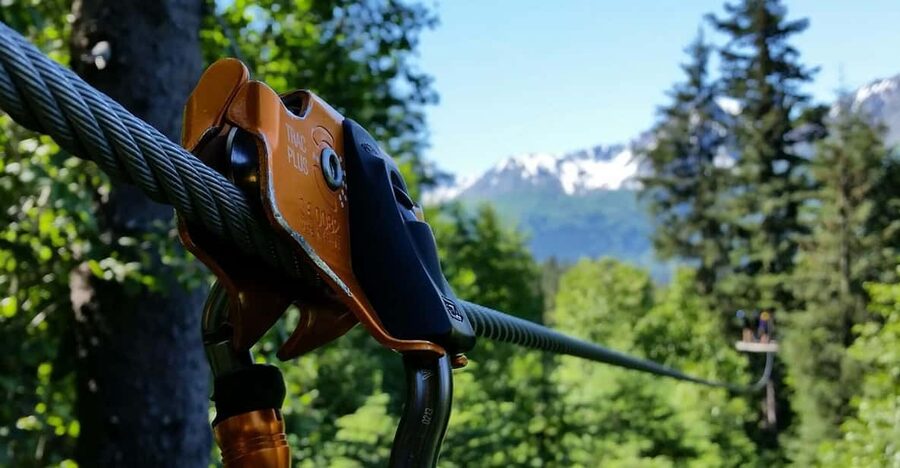
- Glacier valley views early, then rainforest, creeks, and eagle-country spots later
- Small group (up to 8), with hands-on instruction and practice runs
- Two rappels plus bridges for more than just “sit and fly”
- Pickup/drop-off in Seward plus water included
Why Stoney Creek Zipline From Seward Feels Like the Real Alaska
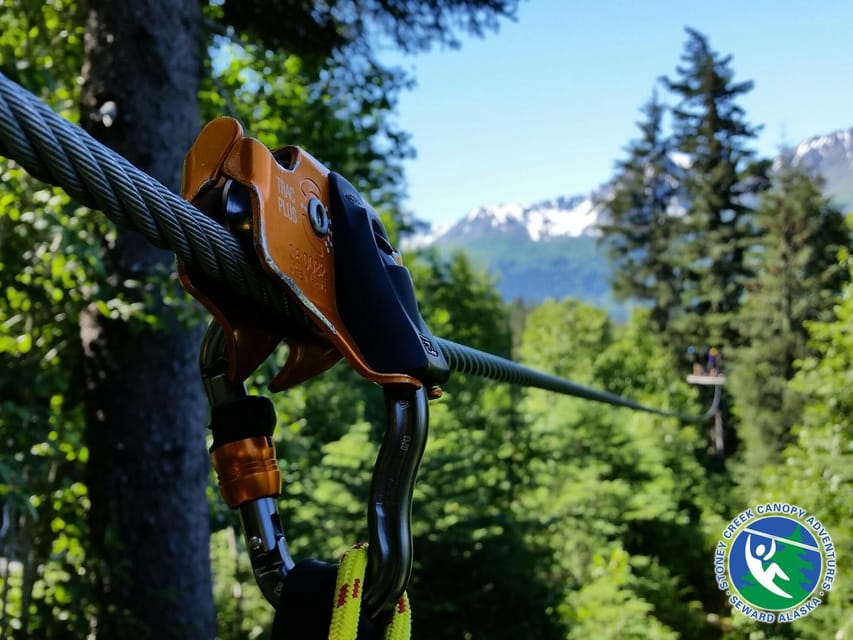
This isn’t just a quick thrill ride. It’s a guided walk-and-fly route through an area that looks and smells like the kind of forest you only see up close in Alaska. The tour starts with wide views of the glacial valley and finishes back down on the forest floor, so the day feels like two different ecosystems stacked into one.
The big win for me is the balance between drama and control. You get that jump-in-the-air feeling, but you also get instruction on proper zipline riding and braking technique before you launch. You’re in a small group—limited to 8—so the guides can keep things moving without rushing you through the skills part.
If you want a tour that mixes scenery, motion, and a real sense of place, this one does the job. You’re literally suspended over Sitka spruce tops while the valley and glacier remain in your line of sight early on, then you transition into a darker, denser rain-forest feel as the course descends.
Getting There: Seward Small Boat Harbor to the Welcome Center Yurt
Your day begins at the Adventure Center in the Seward Small Boat Harbor. Then you board a Stoney Creek Canopy Adventures van and head out to the course. The vans leave promptly—30 minutes prior to your tour time—so I’d plan to be ready early, not frantically searching for the right building.
What’s nice is that the meet-up is simple and visible. As groups arrive, you’ll spot a large yurt perched up in a tree above the area—this is the Welcome Center. It helps you orient fast, and it cuts down on the awkward waiting and guessing.
One practical detail: check-in is 45 minutes before your tour time. That’s your window to get outfitted on schedule, plus it gives you time to ask questions before you head up the forest drive. If you’re the type who hates being rushed, arriving early will make the whole day feel calmer.
Harness Up: What Ground School Actually Does for You
Before anyone flies, you’ll form up at the Welcome Center. This is where you meet your guides, get harnesses and helmets fitted, and get the basics of zipline riding and braking technique. The tour also includes practice “ground school” runs.
This part matters more than people expect. Ziplines aren’t hard, but they are physical and specific: your body position, your grip, and how you slow down all have to feel right. That’s why the first zipline is designed to help you get comfortable—close enough to the ground that you can focus on technique instead of panic.
Also, pay attention to the tour rules about your body and your gear. You must be able to raise your hands/arms completely above your head, no exceptions. So if you have mobility limits, this is the moment to decide early rather than halfway through the day.
The Course at a Glance: Eight Ziplines, Three Bridges, Two Rappels
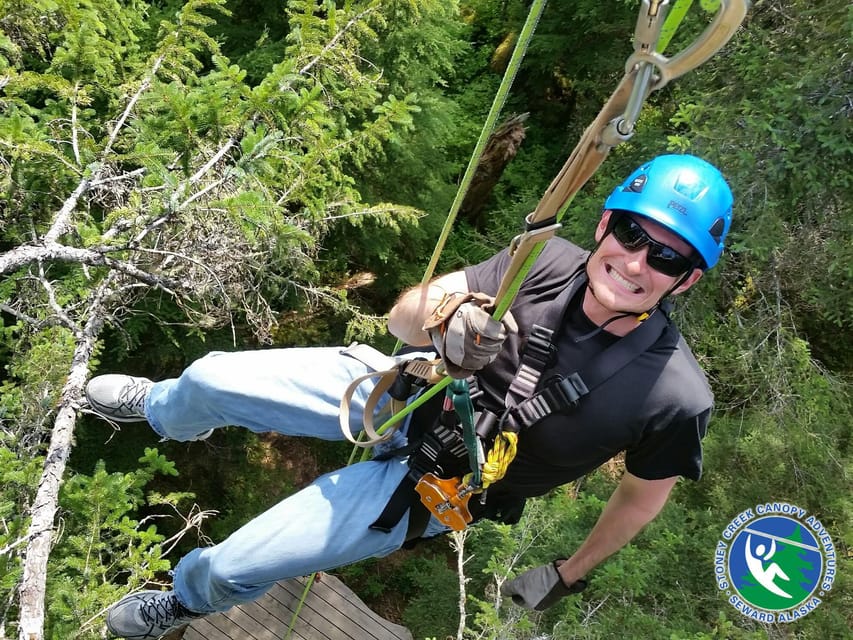
The itinerary is built like a moving story: start open and scenic, then go deeper into forest shade, then finish with vertical moments that bring you back to earth. You’ll cross three suspension bridges and experience two rappels during the full route, all while moving through different elevations.
Even the spacing of the rides is designed for variety. You won’t just do repeated short zips. Some lines are short and confidence-building, while others travel across big sections of the glacial valley. The result is a day that feels like progression, not repetition.
Here’s how the course plays out, in plain language:
- You begin with a first zipline that sets the tone with panoramic valley and glacier views to the southwest.
- After that, the course alternates between higher platforms and forest-floor-level crossings, so you’re constantly changing what you see.
- The final section includes crossing back near the parking lot area and ending with a rappel that finishes the tour.
That structure is a big reason the experience gets strong marks. It’s not just thrills—it’s pacing and scenery management.
First Zips Over the Valley: Where the Glacier Views Start
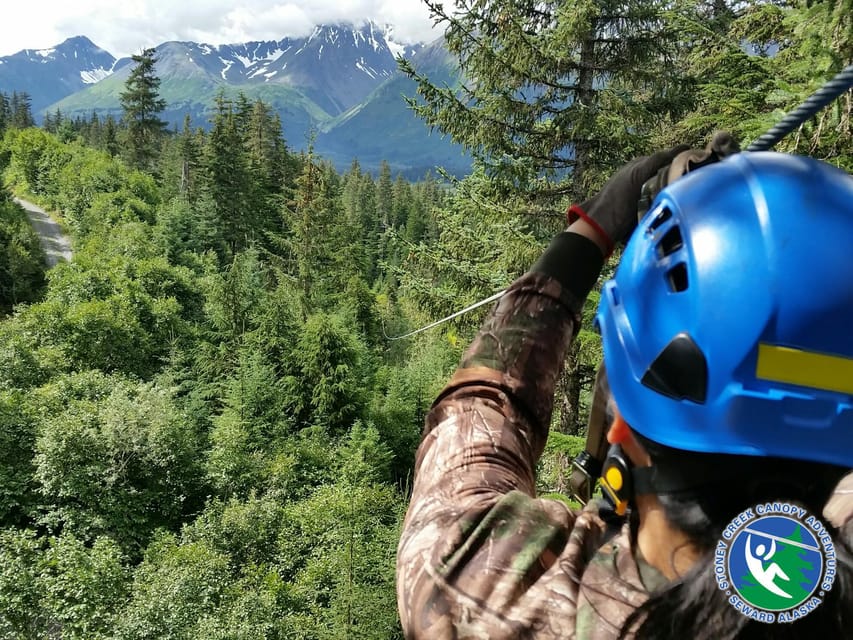
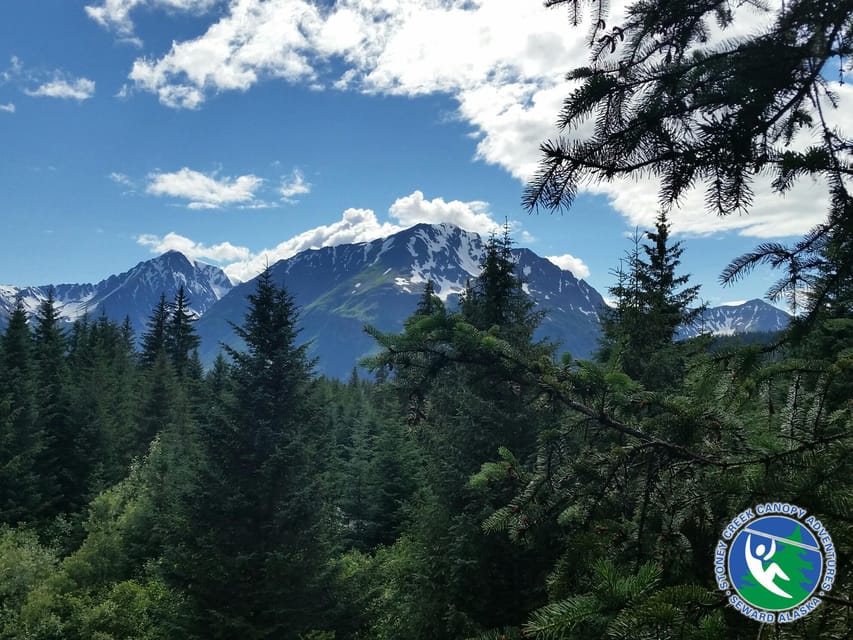
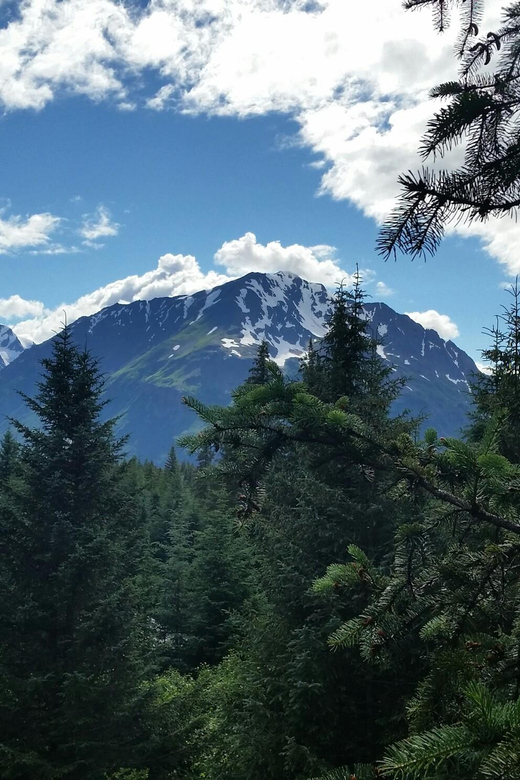
The first launch is a short walk from the course entrance up to the zipline start near the top of the valley. When you get moving, the early platform gives you a wide look across the glacial valley. In Alaska, those glacier-and-mountain sightlines are a big deal—this is one of the easiest ways to see them without hiking all day.
The first traverse is about 65 feet across the fall line and fairly close to the ground. That matters. It’s built for comfort: you learn the feel of the line, how braking works, and how to shift your body without having your brain scream about heights right away.
Then the tour starts moving outward and upward. One traverse runs about 190 feet and lands roughly 50 feet up the trunk of a huge Sitka spruce. This is where you start to feel the “top-of-the-trees” scale. You’re still in the open-valley portion, so you get the sense that you’re flying across terrain, not just between platforms.
Later, you’ll reach one of the longest, highest-feeling moments—another line that sails about 1,100 feet across the valley wall, passing over a reflecting pond. You end that one on a platform about 75 feet up another Sitka spruce. It’s the kind of visual contrast that makes people stop talking mid-ride.
The takeaway for you: if you want photos, start paying attention early. The best glacier framing happens at the beginning, before the route plunges into darker rainforest.
Descending Into Rainforest: The Parts With Creeks, Eagles, and Heady Shade
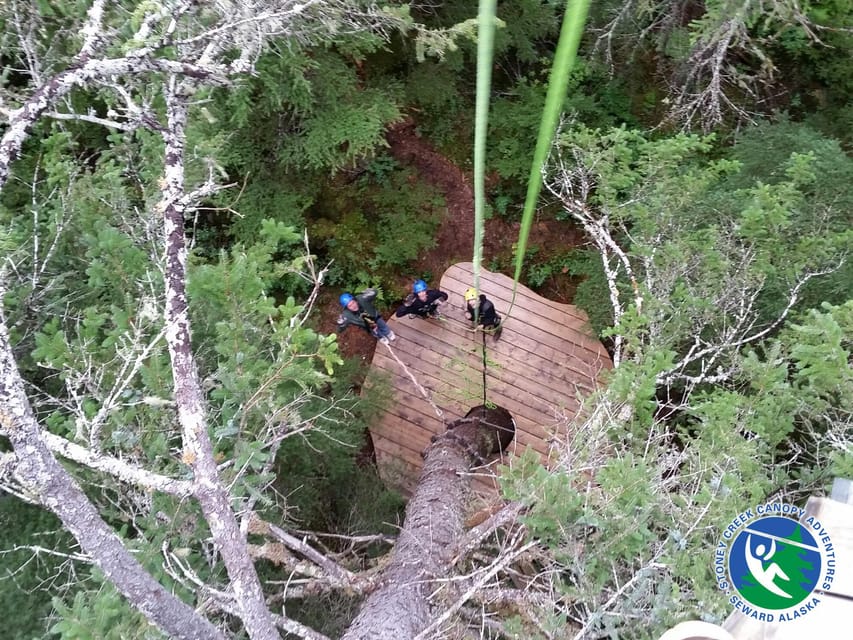
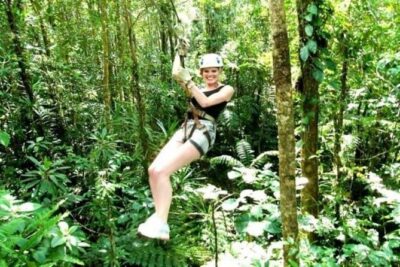
After the earlier valley views, the course descends into deeper, darker rain forest. The vegetation gets dense, and you’ll see sparkling creeks. This change isn’t just aesthetic—it affects how the tour feels. In bright air, you’re looking outward. In the forest, you look down and around at textured greens, thick trunks, and the sense that you’re moving through a living system.
A 600-foot zipline carries you into an enormous mountain hemlock. That kind of tree size changes your perspective. You’re no longer measuring the course in distances alone—you’re also measuring it against something that feels ancient and massive.
Then there’s a shorter line at mid-level and a spot where bald eagles have often been sighted. You can’t count on wildlife on any single day, but the placement here is smart. If you happen to spot an eagle, it’s right in the middle of the forest sequence, which is exactly when you want a surprise.
This section is also where you’ll likely feel the “rainforest quiet” between moves. That’s when your brain catches up to what’s happening and you can enjoy the fact that you’re floating through one of Alaska’s signature ecosystems.
Bridges, Walkways, and Rappels: Extra Tools for Nervous Systems
If you want a tour that includes more than ziplines, this one delivers. You’ll cross three suspension bridges along the way, plus an aerial walkway segment after a rappel.
One key transition happens after you land on a platform and then the group rappels 60 feet down to the start of an aerial walkway. The walkway begins just above the ground and ends 120 feet later at a point 60 feet up another Sitka spruce. That’s a weird-feeling mix of “I’m walking” and “I’m still high.”
Then the route turns about 90 degrees and crosses a long bridge to a hemlock where zipline riding resumes. These bridge and walkway pieces are more than filler. They change your pace, give you a moment to reset between lines, and they also keep the course feeling like a route instead of a series of disconnected jumps.
Later you’ll handle another rappel—a 40-foot rappel that brings you back to the forest floor at the end. The harness comes off, helmets come off, and you’re back in the welcome area to collect belongings and view/select photos from the day.
The practical note: rappels and bridges are still part of the thrill. If you’re nervous about heights, your best bet is to be honest with yourself at the start, because you’ll be asked to keep moving even when you’re thinking about the height.
What Price Buys You: $179 for 2.5 Hours of Gear, Guides, and Motion
At $179 per person for about 2.5 hours, the value comes from what’s included: guides, water, pickup and drop-off, plus safety gear and the instruction that makes the rides work.
You’re paying for more than motion. You’re paying for a full system:
- Transportation from Seward to the course
- Harnesses and helmets
- Guide-led training and practice
- A course design that includes ziplines, bridges, and rappels
Because the group is limited to 8 participants, you’re less likely to feel like you’re waiting around while the guides manage a big crowd. You’ll also get more consistent coaching, especially early on when the first low zipline is teaching you the rhythm.
One small thing to plan for: lanyards aren’t included. You’ll have to manage your phone or camera with a way to secure it to yourself. And you can bring a camera or phone, but you can’t use selfie sticks.
If you’re doing this as part of a Seward trip, think of it as a “high-impact, low-hike” activity. You get serious elevation changes and big views without a full day on trails.
Small Rules That Matter: Shoes, Phones, and Body Requirements
This tour is rain or shine, so you should dress for wet weather even if you start the morning thinking it will be clear. Wear comfortable clothes and closed-toe shoes. Skip open-toed shoes entirely.
A few rules are worth knowing because they affect your day more than you might expect:
- Smoking isn’t allowed.
- Food and drinks aren’t allowed, though water is included.
- Backpacks and bags aren’t allowed.
- No headphones.
- Chewing gum isn’t allowed.
- No alcohol or drugs.
Your biggest “everyday item” concern is electronics. You can have your phone or camera, but you need a way to secure it to yourself. Since lanyards aren’t included, bring something you trust—something that won’t slip when you’re harnessed and moving.
And again, the body requirement is strict: you must be able to raise your arms overhead completely, no exceptions. The goal is safety with harness and movement. If you have limited range, you may want to choose a different Seward activity.
Who Should Book, and Who Should Skip This One
This canopy tour is clearly made for people who want active sightseeing. It’s not for everyone, and that’s a good thing—safety and comfort come first.
You’ll likely enjoy it if you:
- Are comfortable with heights and moving while harnessed
- Can follow instructions and keep your arms raised as required
- Want a guided route through old-growth forest with big valley views early on
You should skip it if you:
- Are afraid of heights
- Have back problems
- Are pregnant
- Fall outside the stated weight range (under 88 lbs or over 270 lbs)
- Are outside the age range (not suitable for children under 10)
If you’re traveling with a mixed group, this tour’s variety helps. There are short, lower elements at the start and then longer, higher rides later. That doesn’t “make it easy,” but it can help people adjust to the experience in steps.
Should You Book This Seward Canopy Tour?
If you want one of your Seward days to feel like a real adventure—big views, real rainforest, and a course that keeps changing—you should book Stoney Creek’s canopy tour. The best part is the design: you start with confidence-building zips and glacier sightlines, then you drop into shaded forest, cross bridges, and finish with rappels that make the day feel complete.
I’d especially recommend it if:
- You like the idea of guided instruction rather than guessing what to do
- You want a mix of scenes: glacier valley, Sitka spruce tops, and hemlock forest
- You want something active but not all-day hiking
Hold off if heights or physical limits are a concern. This is not a sit-and-watch experience, and the rules about arm position and safety gear aren’t suggestions.
If that fits you, it’s a strong value for the time on course—and it’s the kind of Alaska experience you’ll remember because you were actually part of it, not just looking from the ground.
FAQ
Where do you meet for the Stoney Creek Canopy Tour?
You meet at the Adventure Center in the Seward Small Boat Harbor. From there, you board a Stoney Creek Canopy Adventures van to drive to the course.
How long is the tour?
The tour lasts about 2.5 hours. Starting times vary, so check availability for your day.
How many ziplines and bridges are on the course?
The tour includes eight ziplines, three suspension bridges, and two rappels.
Is the tour small group?
Yes. The group is limited to 8 participants.
What should I wear and bring?
Wear comfortable clothes and closed-toe shoes. Bring a way to secure your camera or phone to yourself if you plan to use it.
Is water included?
Yes. Water is included.
Can I bring a backpack or use a selfie stick?
No. Backpacks and bags aren’t allowed, and selfie sticks aren’t allowed.
Is it okay to take photos or video during the ride?
You may bring your camera or phone, but it must be secured to you. The tour doesn’t allow selfie sticks.
What ages and body requirements does the tour have?
It’s not suitable for children under 10. It’s also not suitable for people with back problems, for pregnant women, and for people afraid of heights. Weight limits apply: under 88 lbs or over 270 lbs isn’t allowed. Participants must be able to raise their arms completely above their head.
Is the tour rain or shine?
Yes. It runs rain or shine.