REVIEW · KETCHIKAN
Ketchikan Shore Excursion: Rainforest Canopy Ropes and Zipline Adventure Park
Book on Viator →Operated by Southeast Exposure Zipline & Kayaks · Bookable on Viator
Ketchikan turns trees into flight. This shoreline adventure takes you off the cruise shuttle path and into a cedar-rich canopy where you’ll move zipline-first, with big views of treetops and the water below.
I really like the small-group vibe (up to 11 people) and the way the guides keep things moving without rushing the safety steps. Another big plus is the focus on real variety: ziplines, rope bridges, suspended logs, and even a tall climbing tower for bragging rights.
One thing to keep in mind: it’s rain- and weather-dependent. If conditions aren’t safe, you’ll be rescheduled or refunded, and if the group runs a bit large, you may wait between elements.
In This Review
- Key points before you go
- Entering the Cedar Canopy: What This Adventure Really Feels Like
- Getting There From the Port: The Rock Meeting Point That Actually Works
- Gear Up Under the Cedars: The Start of Your Course
- Seven Ziplines and Eight Canopy Ropes: How the Course Is Structured
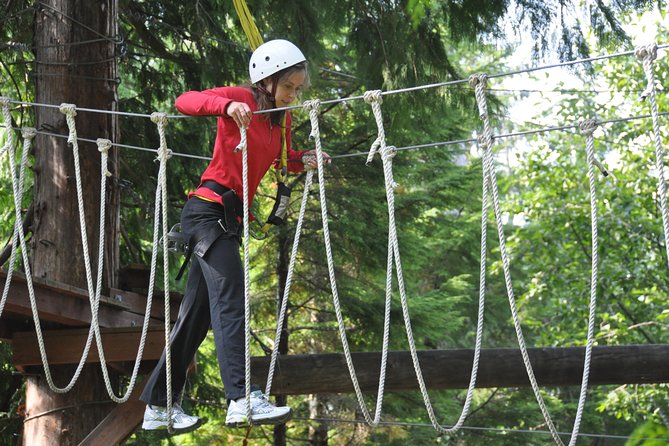
- Rope Bridges, Suspended Logs, and Swinging Steps
- The 50-Foot Tower for the Brave (and the Photo Lovers)
- Guides and Group Size: Why the Experience Feels Personal
- Rain, Cold, and What to Wear (Yes, It Happens)
- Who This Zipline Adventure Fits Best (and Who Should Pause)
- Price and Value: Is $150 Worth It?
- Quick H2: Should You Book This Ketchikan Canopy Ropes and Zipline Adventure?
Key points before you go
- Seven ziplines + eight canopy ropes for a full “course,” not a quick one-and-done slide
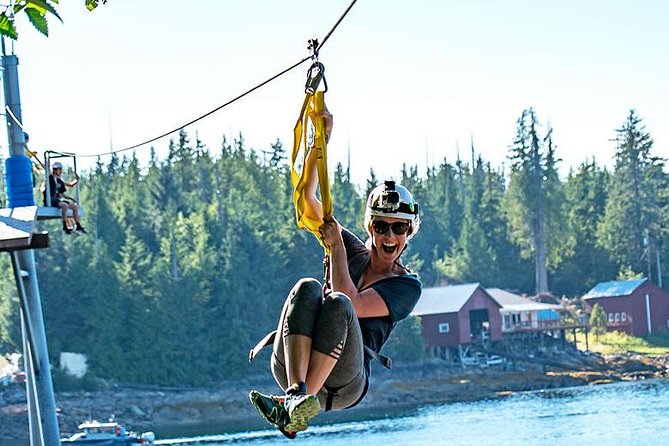
- Over-water moments, including a platform with views down toward the bay
- Safety gear and a briefing before you’re clipped in and flying
- Max 11 travelers, which helps keep the experience personal
- Optional high challenges, like the 50-foot tower and other suspended obstacles
- Round-trip pickup and drop-off from Ketchikan so you’re not doing any logistics math
Entering the Cedar Canopy: What This Adventure Really Feels Like
This is ziplining as an actual forest course. You’re not just strapping in for one line—you’re learning the flow of the site and then running element after element above the treetops. The canopy setting matters in Ketchikan: big, wet-weather cedars and misty views make everything feel extra Alaskan, even when you’re only a few dozen feet above the ground.
The first “wow” tends to come early. After pickup, you’ll gear up and get your bearings in the forest pavilion area, then you move into the canopy system with instructions on how the course works and how to use the equipment correctly. Once you’re clipped in, you’ll zip over water and then stand over it from a unique platform, which is a great place to pause and catch your breath.
You should expect the ground to feel far away at times. Some elements involve suspended movement (rope bridges and step-like obstacles), so you’ll want to stay focused and steady rather than treating it like a theme park ride.
Getting There From the Port: The Rock Meeting Point That Actually Works
The best part of the logistics is that you don’t have to figure out where to park or how to find the right gate. Pickup and drop-off are included, and you’ll meet your representative at a clear landmark.
Your main meeting point is The Rock on Berth 2, opposite the corner of Mission and Front Streets. Your rep will be holding a sign with your tour name. Give yourself extra time after you get off the ship—plan to allow up to 15 minutes to locate the meeting spot depending on your berth.
If you’re on a Ward Cove sailing (Norwegian Cruise Lines and Oceana Cruise Lines), the plan is slightly different. For tours earlier than 9am, pickup can be at Ward Cove. For later departures, you may have time to pop into town before the activity. If you’re using the free shuttle, build in a buffer, because lines at 9am can get long.
This tour also recommends a simple rule: our rep will arrive about 10–15 minutes after the listed meeting time for Ward Cove pickups. For early departures, that’s why you should not cut it close.
Gear Up Under the Cedars: The Start of Your Course
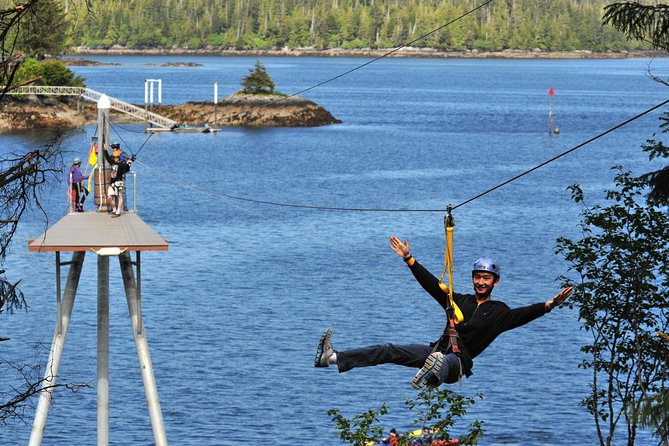
After you arrive at Southeast Exposure Outdoor Adventure Center, you walk under a grove of cedars and into a forest pavilion area to gear up. This is where the experience shifts from cruise-ship schedule to real outdoor pacing.
One detail I love here is that you start in an area that feels like the forest itself is part of the tour, not just background scenery. You’ll hear safety instructions and get an overview of the route so you know what’s coming. And yes, the canopy includes very old trees—cedars that can be hundreds of years old, with parts of the experience up around 45 feet.
Then comes the first serious aerial moment. You’ll zip over water and get time on a platform with views down toward the bay. This is a great checkpoint for photos and for calming your brain before you move deeper into the course.
Seven Ziplines and Eight Canopy Ropes: How the Course Is Structured
Here’s what you’re signing up for: seven ziplines and eight canopy ropes. The course is built so you gradually move from “watch and learn” to “fly and trust the system.”
Before you launch each segment, you’ll get the equipment basics and how to move safely through the next element. That matters, because different obstacles feel different—some are about smooth tension and balance, while others require more deliberate foot placement.
A big practical upside: the course includes multiple “standing” moments on platforms, rope approaches, and connecting sections. In other words, you’re not strapped in nonstop for three hours. You’ll still feel the adrenaline, but you also get short breaks that help you reset.
Some riders care most about line time. Others care more about the view. If you’re in the second camp, this one delivers: you’re high enough to see treetops clearly, and you also get moments where the water is part of the view, not just something you pass over.
Rope Bridges, Suspended Logs, and Swinging Steps
Between the ziplines, you’ll hit the “how steady are your legs?” portion of the adventure. The course includes rope bridges, suspended logs, and steps that swing. This is where you’ll feel the difference between just holding on and actually controlling your center of balance.
I like that the course doesn’t pretend these parts are effortless. Instead, you’re given instructions and you move at a pace that fits the group. If you’re afraid of heights, it’s not always a cure—but it often becomes manageable once you’re clipped in and guided through the technique.
A useful expectation: suspension elements can take longer than straight line zip segments. So build your time mindset around “three and change hours of active course,” not “a quick zipline highlight reel.”
The 50-Foot Tower for the Brave (and the Photo Lovers)
If you want the extra challenge, there’s a climbing tower and a circular staircase reaching about 50 feet (15 meters). At the top, you get a bird’s-eye look over the canopy and the water down below—exactly the kind of vantage that makes cruise passengers stop and stare when you show them your photos later.
In practice, this section is best if you’re the type who likes to work for your view. If you’re tired from the earlier elements, it can feel like a lot. On the flip side, if you’re energized and want the “I did that” moment, this is where the day peaks for many people.
Some people also described a more dramatic finish element at the end of the course, which adds to the thrill if you like adrenaline options.
Guides and Group Size: Why the Experience Feels Personal
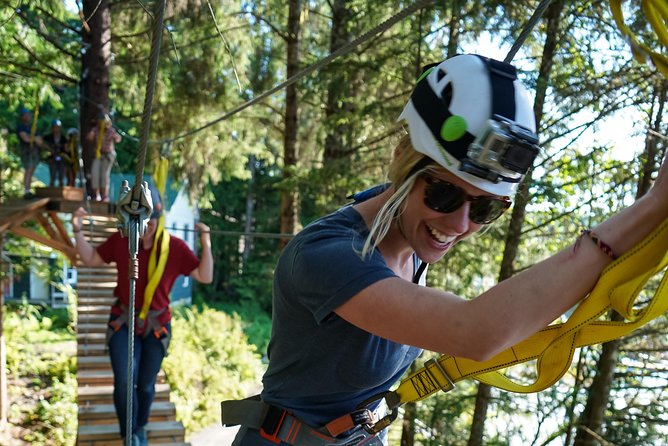
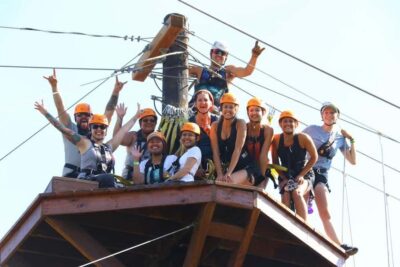
This is capped at a maximum of 11 travelers, and that changes the vibe. Instead of a conveyor-belt operation, you’ll get a guide who can actually watch you, correct your technique, and keep your confidence up.
The guide team quality shows up in the details. I’ve seen multiple guide names praised for safety-first coaching and for adding local context. People mentioned Ely and Mallory keeping the day excellent, Liam and Shea bringing humor and confidence, and Kane and Ethan making first-timers feel ready. Others highlighted Shay and Kevin for staying upbeat even with constant rain, plus Gabby and Spencer for clear safety direction.
That matters because confidence doesn’t come only from gear. It comes from knowing what you’re supposed to do next and feeling like someone has your back if you wobble.
If you’re older or newer to this type of course, don’t let the height scare you. The bigger issue is whether you can follow instructions and keep moving safely at your own pace.
One caution from real-world pacing: when the group gets on the higher end, people can end up waiting between elements because everyone has to clear the line before the next person goes. It doesn’t ruin the day, but it’s worth knowing if you hate downtime.
Rain, Cold, and What to Wear (Yes, It Happens)
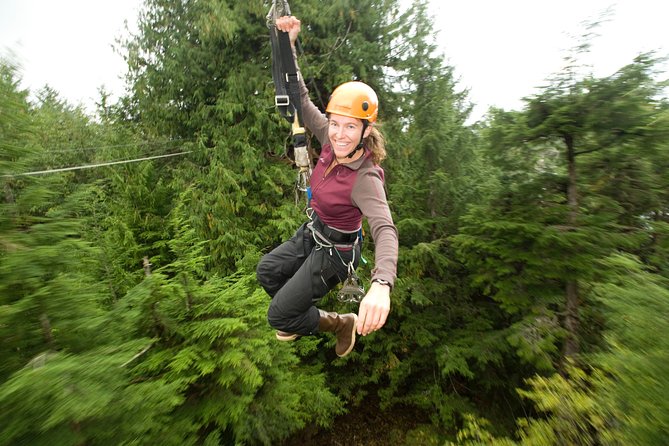
Ketchikan can be wet, and this excursion operates in a real outdoor environment. Guides and riders have specifically noted that rain doesn’t automatically stop the fun, so you should plan like you’ll get damp.
My advice is simple: bring waterproof layers you’re comfortable moving in. If you only pack for sunshine, you’ll feel it quickly once you’re in the canopy gear-up and moving between platforms.
Also remember: even if it’s not freezing, you’re wearing outdoor gear and spending time up in the air. It can feel cooler once you’re off the ground and the wind picks up.
If you like recording memories, some riders used action-camera setups and you can also take your own photos during the course. The aerial view of treetops and water is exactly what makes camera time worth it.
Who This Zipline Adventure Fits Best (and Who Should Pause)
This is listed for travelers with moderate physical fitness and specific body-size limits. The minimum height is 4 feet 6 inches (121 cm), minimum weight 70 pounds (30 kg), and maximum weight 280 pounds (127 kg).
So who it suits:
- Families and groups where everyone can handle heights while staying calm
- People who want a full course, not just a couple of short zips
- Travelers who like learning—because guides share info about the forest and the area
Who should think twice:
- Anyone who can’t meet the height/weight limits
- Anyone who struggles with steady balance on suspended surfaces
- People who get overly anxious about heights without the option to take a moment and reset (you’ll want to follow the course rhythm)
And yes, some kids have joined when they meet the physical requirements, so it can work for multigenerational groups.
Price and Value: Is $150 Worth It?
At $150 per person for about 3 hours 30 minutes, this is not a “cheap add-on.” You’re paying for:
- Licensed safety gear and guided course instruction
- A multi-element layout with seven ziplines plus ropes and bridges
- Round-trip transport included from Ketchikan
- A small-group format (max 11), which usually means more attention and less waiting than big production tours
So the value question comes down to your priorities. If you want the cheapest cruise activity, this won’t be it. If you want one of the more active, memorable Ketchikan shore days—where the forest itself is the attraction—then $150 starts to make sense fast.
Also, the course includes multiple “finish” style moments: water views early, aerial canopy segments in the middle, and optional higher challenges at the end. That mix helps it feel like a complete experience rather than a short thrill.
One more quiet value point: the tour includes a refund if your ship is delayed and you can’t attend. That’s the kind of safety net that matters in port days, when timing can be unpredictable.
Quick H2: Should You Book This Ketchikan Canopy Ropes and Zipline Adventure?
If you’re choosing between a relaxed tour and an activity where you’ll be clipped in, moving around, and feeling adrenaline, I’d book this—especially if you want the over-water moments and the variety of ropes and bridges.
Book it if:
- You’re okay with a wet, windy environment and you’ll dress for it
- You want a small-group day with safety instruction that feels organized
- You’d enjoy optional challenges like the 50-foot tower for photos and a higher view
Skip it (or at least rethink) if:
- You’re not comfortable with suspended obstacles like rope bridges and swinging steps
- Your schedule is extremely tight and you dislike waiting between course elements
Overall, this one earns its reputation. The guides’ energy, the safety-first approach, and the real canopy course make it feel like a full adventure day, not just a zipline “taste test.”