REVIEW · ELDA
Elda: El Bolón via ferrata with zipline and abseiling
Book on GetYourGuide →Operated by Masaventuras · Bookable on GetYourGuide
One zipline, and your pulse never quits. Elda’s El Bolón via ferrata mixes three linked climbing sections (K1, K3, K2) with a huge zipline and abseiling in the Sierra de Bolón, so you’re doing far more than just “a walk with a view.” It’s the kind of active day that turns the rock face into a real route, with hanging bridges and climbing walls adding extra bite.
I love how the experience starts with a clear gear lesson. You’ll get harness, helmet, and an energy absorber, and the team explains how the system works in plain language before you commit to the first wire and rung.
I also love the safety feel of a guided group adventure. You stay clipped to the lifeline and move at a pace that matches the group, which makes the adrenaline land without turning into chaos. The main drawback: this is not for you if heights make you panic—people with vertigo (or altitude sickness) should skip it.
In This Review
- Key things I’d bet on
- The setting: Sierra de Bolón, near Elda (and very much in the “action” zone)
- Gear-up at the start: harness, helmet, and the “don’t worry” briefing
- Via ferrata sections K1, K3, and K2: climbing that feels paced, not rushed
- Hanging bridges and exposed moments: how to handle them without going stiff
- The long zipline: the payoff you’ll talk about later
- Abseiling included: a skill moment, not just more fear
- Timing and duration: 3 hours that pack a lot of movement
- What’s included (and why that value matters)
- Not included: food and drinks (bring your energy)
- Who should book this, and who should not
- What to bring: simple things that prevent sore headaches
- Should you book Elda’s El Bolón via ferrata with zipline and abseiling?
- FAQ
- How long is the El Bolón via ferrata experience?
- What’s included in the price?
- Is food and drinks included?
- What equipment do I need to bring?
- What languages are the guides available in?
- Where do we start?
- Is it okay for children?
- When can I cancel for a full refund?
Key things I’d bet on
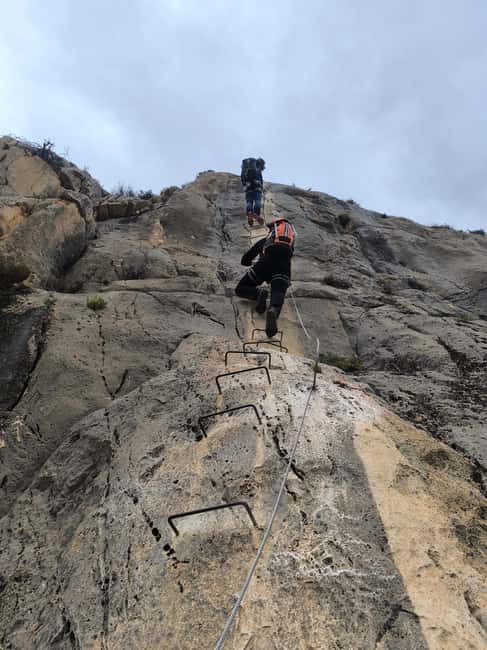
- Three linked via ferrata sections (K1, K3, K2): not just one short taste.
- Over 1,000 meters of zipline action: a major adrenaline payoff.
- Hanging bridges + climbing walls: the “hands-on” part is built in.
- Abseiling included: controlled descent, guided.
- Safety-first gear briefing: harness and energy absorber set-up happens before you climb.
The setting: Sierra de Bolón, near Elda (and very much in the “action” zone)
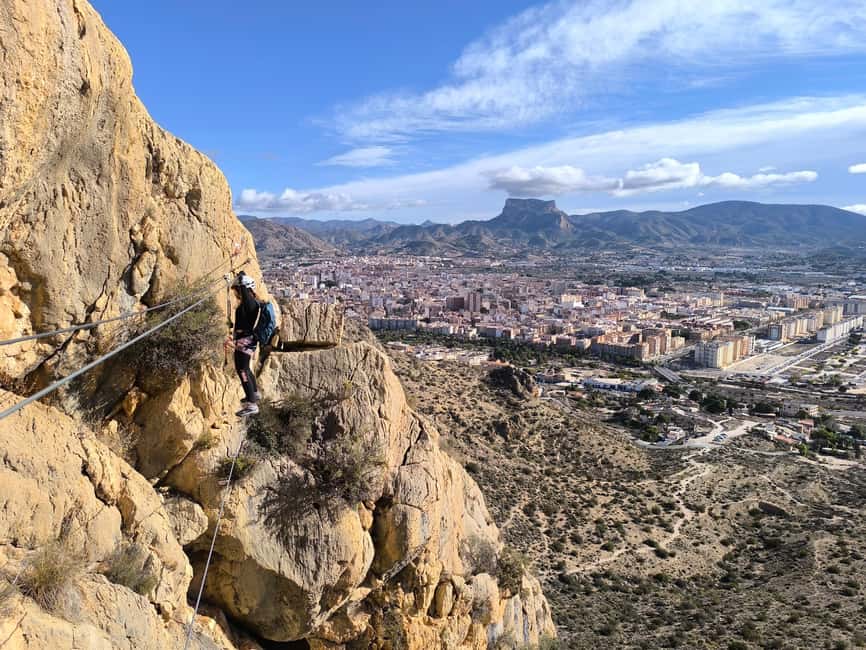
This is Valencian Community adventure country, centered around the Sierra de Bolón near Elda. You start at the foot of the mountain, then walk a short stretch to reach the via ferrata line. That short approach matters because it gets your legs warm without tiring you out before the technical part.
You’re not going for scenery from a bus window. You’re going because you want to work with your body: hands, feet, balance, and nerves—all while staying properly attached.
Gear-up at the start: harness, helmet, and the “don’t worry” briefing
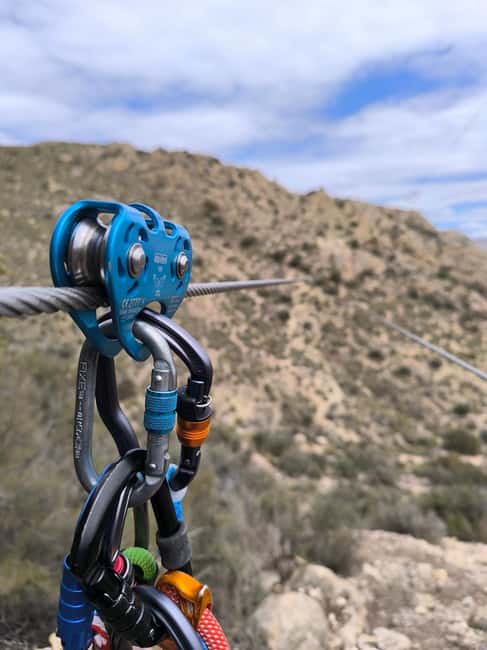
You meet at the base of the Sierra de Bolón and the first chunk is practical. The team fits you with your harness, helmet, and energy absorber, then gives you a clear, simple explanation of how to use the equipment. That early instruction is a huge quality-of-day factor, because via ferrata can feel intimidating until you understand the basics.
After that, there’s a short walk—about 10 minutes—to the start point. Once you’re there, you hook your carabiners to the lifeline. That moment is your mental switch: you’re no longer “watching” the route. You’re on it.
Via ferrata sections K1, K3, and K2: climbing that feels paced, not rushed
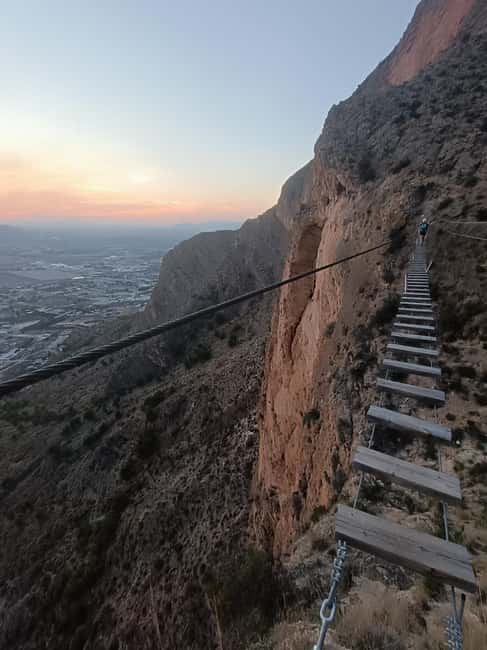
The core of the outing is three linked via ferrata sections, labeled K1, K3, and K2. The point of linking them is variety: instead of doing one short climb and calling it a day, you keep moving through different technical sections. You also get a stronger sense of progression—first learn how to move, then apply it as the route keeps going.
Expect real climbing work. The highlights call out crossing hanging bridges and climbing walls, and that’s exactly where your focus goes. You’re rung-by-rung on vertical sections, and your hands and feet do the talking. The route is designed for a group setting, so you’re not trying to interpret everything on your own with only a map.
One smart detail in the flow: at a certain point you climb up, then take a break. That break lets you reset your grip, breathe, and get your bearings before the next move.
You’ll also encounter a horizontal flanking option after a top section. That type of move tends to give you a different perspective—more sideways balance than “just up”—and it’s a great change of pace once your forearms stop feeling like bricks.
Hanging bridges and exposed moments: how to handle them without going stiff
The hanging bridges and exposed bits are where the day earns its adrenaline label. The good news is that you’re not doing this alone. The entire experience is set up as a guided group activity, with expert support throughout.
Here’s how I’d approach the “bridge moment” so you don’t white-knuckle your way across. Move deliberately. Keep three points of contact when you can. Don’t fight the motion—use it. And keep your eyes on your next step, not on the void beneath.
If you already know you get shaky around heights, be honest with yourself. This is exactly the environment that can trigger fear fast.
The long zipline: the payoff you’ll talk about later
The zipline is the headline. The activity promises the longest zipline in Alicante, with over 1,000 meters of zipline action, plus a unique ride over 100 meters long. Even if you’re not a “thrill seeker,” this is the part that turns the whole outing into a story.
A zipline is fun because it changes the body’s job. Up on the ferrata, you’re gripping, stepping, balancing. On the zipline, you’re letting go—literally. You’ll feel your nerves drop into a calmer rhythm as you glide.
Practical tip: wear your comfortable clothes securely and keep loose items handled. If anything could snag, it will try to. Also, breathe before you launch. It sounds simple, but quick breathing helps you avoid that surprise-hyperventilate moment when you step into space.
Abseiling included: a skill moment, not just more fear
Abseiling is listed as part of the experience, which makes this outing more than a one-note climb-and-zip loop. Abseiling adds a controlled “down” to the day, so you’re not only working upward. That matters because it balances effort and gives your muscles a break from constant climbing.
You’ll be guided through the process, and you’re in gear designed for this kind of work. Still, the mindset helps: think of it as slow, steady control. If you treat it like a controlled descent rather than a sudden drop, it feels more doable—even if you’re not thrilled about it.
Timing and duration: 3 hours that pack a lot of movement
The experience runs about 3 hours. That’s a sweet spot: long enough to get real climbing skill moments and a major zipline, but short enough that you’re not spending your whole day exhausted.
You’ll likely spend time on:
- gear fitting and instruction
- the short walk to the start
- the via ferrata sections and linked route segments
- the breaks and handoff between activities
- the return path
Also note that the duration stays the same, but starting times can vary based on availability. So plan your day around the slot you pick.
What’s included (and why that value matters)
For about $53 per person, you’re paying for more than equipment and a route. You’re buying a guided safety system plus support.
Included items:
- Professional guides
- Via ferrata equipment (helmet, harness, energy absorber)
- Civil Liability and Accident Insurance
- Photos and videos of your experience
- Entertainment
That photo/video piece is a real value add. Ferrata days vanish fast into memory fog unless you have something to anchor the experience. It also means you can focus on moving safely instead of constantly stopping for your phone.
Insurance is another quiet but important value factor. You’re dealing with heights, climbing hardware, and controlled descents—so the fact that civil liability and accident insurance are included matters.
Not included: food and drinks (bring your energy)
Food and drinks are not included, so plan for it. You’ll want to bring something simple to eat before you start and/or as a snack during breaks.
The day involves physical work—climbing, balance, and adrenaline. Even if you’re “fit enough,” your energy can still dip. Pack water and a snack you actually like.
Who should book this, and who should not
This is best for adults and older kids who can handle heights and want a real challenge. It’s a safe group adventure when you follow instructions and work within your comfort zone.
It is not suitable for:
- children under 5
- pregnant women
- people with vertigo
- people with altitude sickness
If any of those apply, skip it. It’s better to choose a different kind of experience where you can enjoy the day without battling your body.
If heights don’t bother you and you enjoy active days, you’ll likely find the combo of climbing + zipline + abseiling very satisfying. That mix is rare in one outing, and it keeps the day from feeling repetitive.
What to bring: simple things that prevent sore headaches
The guidance is straightforward: bring comfortable clothes and food and drinks.
I’d also add practical prep that fits the same logic: wear something you can move in, and bring gear that won’t tangle. If you show up in stuff that restricts your movement, the via ferrata part gets harder than it needs to be.
Also, if you’re sensitive to cold, bring a layer. Mountain air can feel different once you start moving and then pause for breaks.
Should you book Elda’s El Bolón via ferrata with zipline and abseiling?
If you want one experience that throws together via ferrata climbing, a long zipline, and abseiling, this is a strong pick. The guided setup, the equipment briefing, and the fact that you’re clipped in with the lifeline reduce the “solo uncertainty” factor that can make heights feel worse than they are.
Book it if:
- you’re comfortable with heights and exposure
- you want an active day with varied challenges
- you like guided adventures where safety gear is handled for you
- you value photos/videos afterward
Skip it if:
- vertigo or altitude sickness is an issue
- you’re mainly looking for an easy stroll with views
- you don’t want to bring your own food and drinks
Bottom line: this is a $53 adrenaline-and-skill outing built for a smooth, safe group pace. If you’re ready for heights, it’s the kind of day you’ll remember as more than a photo—it’s a full-body route.
FAQ
How long is the El Bolón via ferrata experience?
It lasts 3 hours.
What’s included in the price?
Professional guides, via ferrata equipment (helmet, harness, and energy absorber), civil liability and accident insurance, entertainment, and photos/videos of your experience.
Is food and drinks included?
No. Food and drinks are not included, so you should bring them.
What equipment do I need to bring?
You don’t need to bring the via ferrata equipment. The tour provides helmet, harness, and energy absorber. You should wear comfortable clothes.
What languages are the guides available in?
The live tour guide is available in English, French, Catalan, Portuguese, and Spanish.
Where do we start?
You meet at the foot of the Sierra de Bolón.
Is it okay for children?
It’s not suitable for children under 5.
When can I cancel for a full refund?
You can cancel up to 24 hours in advance for a full refund.