REVIEW · DENVER
Denver: 6-Zipline Rocky Mountains Adventure Tour
Book on GetYourGuide →Operated by Denver Adventures · Bookable on GetYourGuide
Fast zip lines cut the Rockies’ noise. In about 3 hours near Denver, you glide 6,000+ feet total through pine forest and mountain meadows at up to 50 mph, high above the ground. I especially like the ACCT-certified setup—guides are trained, safety gear is included, and the whole operation feels organized. A possible drawback: the experience includes a 15–20 minute uphill hike and it’s not a good fit if you have medical limits or strong fear of heights.
The guides make a big difference here. People call out support and humor from staff like Sam, Heath, and Tony, and that matters when you’re climbing up to launch points and learning the gear fast. You’ll also want to plan for mountain weather, because the temp difference versus Denver can be as much as 20 degrees.
In This Review
- Key Things to Know Before You Strap In
- Getting to the Course: Conifer Is Close Enough to Feel Easy
- First Stops on the Ground: Safety Briefing and a Tough Little Warm-Up
- Six Ziplines Through the Rockies: Speed, Height, and Rhythm
- Pine Forests and Mountain Meadows: Why the Views Feel Worth the Hike
- The Guides and the Safety Culture: ACCT Certified, Actually Helpful
- Price and What $151 Gets You (Plus Realistic Extras)
- Packing Like You’re Going to the Mountains (Not Just a Backyard)
- Fitness, Height Fear, and Weight Limits: The Practical Reality
- How the 3 Hours Usually Feels: Active, Then Fun, Then Over
- Should You Book This Denver Zipline Adventure?
- FAQ
- How long is the Denver 6-zipline Rocky Mountains tour?
- Where is the meeting point?
- How fast and how high are the zip lines?
- How many zip lines are included?
- Is pickup available from Denver?
- What’s included in the price?
- What should I bring?
- Are backpacks allowed?
- What are the weight limits?
- Who is this tour not suitable for?
Key Things to Know Before You Strap In
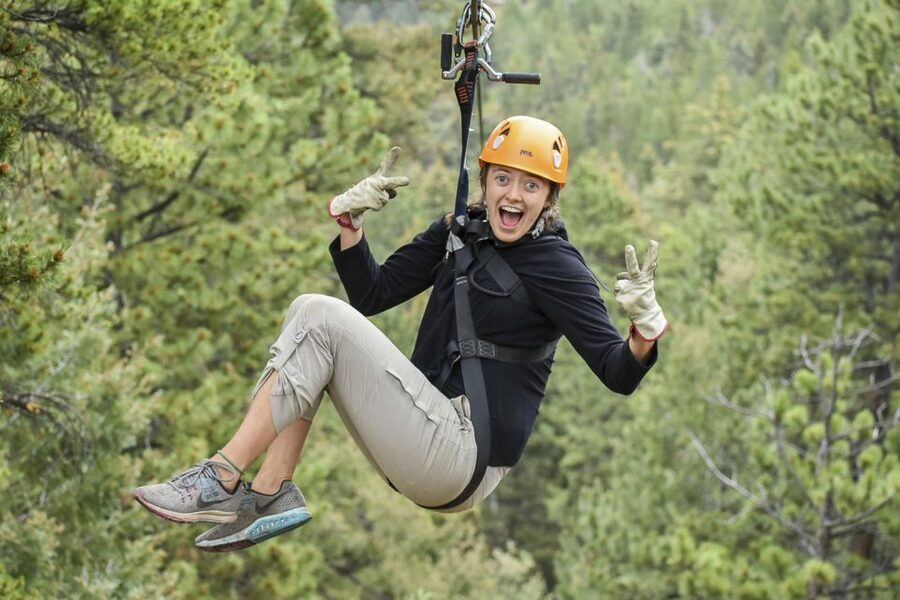
- 6 ziplines over 6,000 feet total: it’s a sequence, not one quick run.
- Up to 50 mph and about 200 feet up: you feel the speed and the height.
- A real climb first: expect a 15–20 minute uphill hike before the first lines.
- ACCT-certified guides and course: safety gear comes included.
- Views change every few cables: pine forest to open meadows as you go.
- GoPro add-on on site: crystal-clear footage is available to rent.
Getting to the Course: Conifer Is Close Enough to Feel Easy
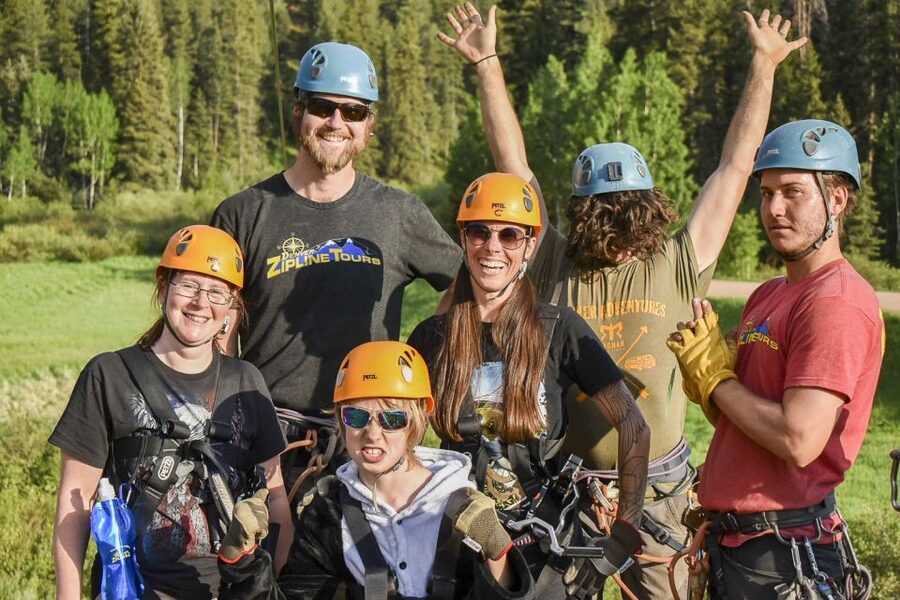
This tour starts at 26267 Conifer Rd, Conifer, CO 80433, about 30 minutes from downtown Denver. That’s one reason I think it works well for a day trip: you’re not giving up most of your time to driving.
If you’d rather not deal with mountain directions, pickup and drop-off can be arranged for an extra fee through Denver Adventures. The drive is about 30 minutes each way, and it’s offered from downtown Denver, the Tech Center, or locations west of Denver.
Once you arrive, you’ll transition from city mode to mountain mode quickly. You’re at elevation—over 8,000 feet (about 2,500 meters)—so even if the city feels mild, expect cooler air and fast-changing conditions.
First Stops on the Ground: Safety Briefing and a Tough Little Warm-Up
Your time on the clock starts with a safety briefing and guidance on how the harness and lines work. This is not a casual “good luck” situation. The course is ACCT-certified, and the guides are trained to keep things clear and hands-on.
Then comes the part that catches people off guard: a 15–20 minute uphill hike. Some folks describe the first climb as rough and steep. The upside is that it warms you up for the experience, and it sets the tone that you’re going somewhere outdoorsy, not just staying on a flat deck.
A practical tip I’d follow: wear shoes that can handle uneven ground. People specifically suggest tennis shoes or hiking shoes. Closed-toe shoes are required, and you’ll be happier if your soles grip well on the slope.
Six Ziplines Through the Rockies: Speed, Height, and Rhythm
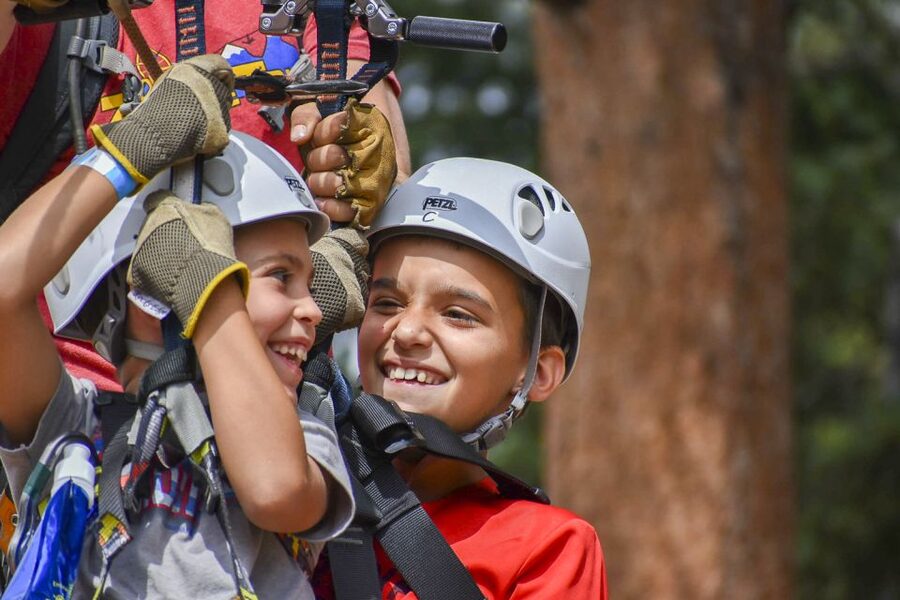
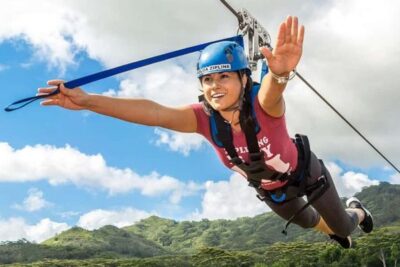
This is a 6-zipline adventure with speeds up to 50 mph (75 kph). The zips are strung together so you get a rhythm: hike up to launch, zip across, then move to the next platform.
The height is a key part of the thrill. You’ll be flying at around 200 feet (about 75 meters) high on the lines. The overall cable length totals over 6,000 feet (about 2,000 meters), so it’s not over before you start building excitement.
I like how the design turns into a guided “progressive view” tour. As you move from one section to the next, you go from pine forests to mountain meadows, meaning your scenery shifts while your speed stays high.
One more thing: some people add a GoPro for the ride. Since a rental is available on site, you can capture the view and your reactions without fiddling with phones on windy platforms.
Pine Forests and Mountain Meadows: Why the Views Feel Worth the Hike
At this elevation, the air feels sharp and clean. I’d call that more than a nice bonus—it changes how the experience feels. Instead of just hearing whoosh sounds, you’re outside where the air has room for your lungs and your brain.
The course takes you through pine forests where the trees frame your flight. Then you get stretches over open meadows, which can make the horizon feel much wider. Even if you’re focused on safety and breath control, the shift from forest canopy to open views gives you something new to look at every couple of lines.
Guides also matter here. Several people mention attentiveness, humor, and support. That helps when your attention should be split between following instructions and taking in the scenery.
The Guides and the Safety Culture: ACCT Certified, Actually Helpful
The best thing about this tour, in my eyes, is the competence behind it. You get ACCT-certified guides and an ACCT-certified course, plus all safety equipment. That combination matters because zip lining isn’t just fun—it’s a gear-and-procedure activity.
People highlight guide qualities like being attentive and explaining things clearly. Some named staff members—Sam, Heath, Tony—show up in positive feedback, and that’s a good sign the team is consistent, not random.
If you’re nervous, don’t assume you need to be fearless to go. One person said they were scared ahead of time due to heights, but the guides helped them build confidence and feel secure.
Price and What $151 Gets You (Plus Realistic Extras)
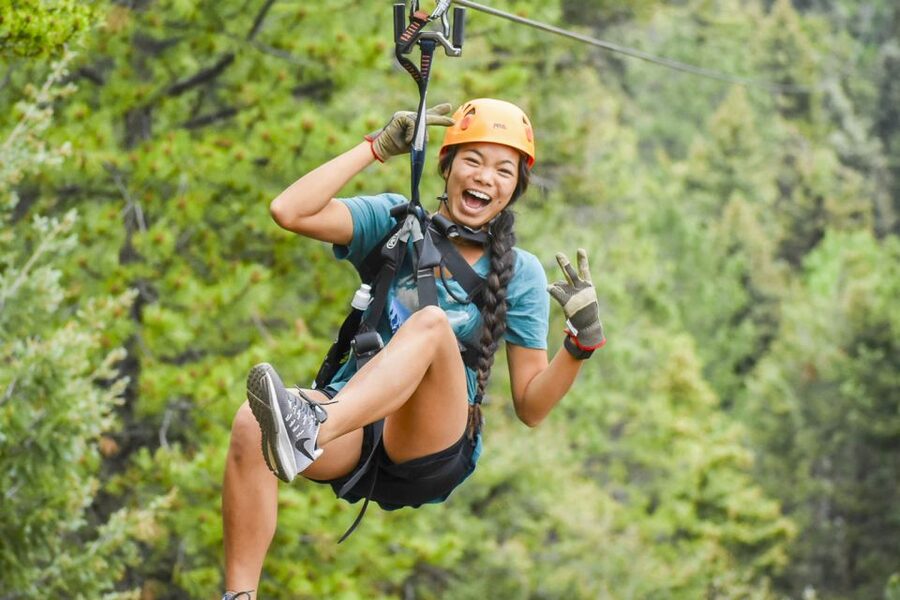
At $151 per person for about 3 hours, the value is strongest when you factor in what’s included. You’re not just paying for the zip lines. You’re also getting:
- ACCT-certified guides
- an ACCT-certified course
- all safety equipment
- snacks and drinks
Those basics reduce decision fatigue on your side. You don’t have to bring gear, and you’ll have something to nibble during breaks between cables and hikes.
What can add cost:
- Pickup and drop-off can be arranged for an extra fee.
- GoPro rental is available onsite for an extra fee.
- Gratuity is appreciated, and typical guidance is $10 to $20 per zip line rider.
This is one of those activities where I think you should budget for gratuity if the guides do a good job. Given how often people mention safety, humor, and support, it’s not a “pay extra because it’s required” situation—it’s paying for real work.
Packing Like You’re Going to the Mountains (Not Just a Backyard)
The basics you should bring are straightforward:
- Sunglasses
- Closed-toe shoes
- Breathable clothing
Then pack for mountain weather. The temperature difference between Denver and the zip line area can be as much as 20 degrees, so plan for layers. The tour suggests items like a windbreaker, sunscreen, hat/cap, and light gloves.
A few small but high-impact extras show up in real feedback:
- Bring your own water bottle, because the climb to the first lines can be steep.
- People also mention there are refill water spots on the hikes, but having your own still feels smart.
- Bring a hair tie if you have long hair. It helps with wind and keeps your focus on the ride.
One caution: backpacks are not allowed. The instructions also mention bringing a small bag for essentials, but the no-backpack rule is the one you should treat as firm. Keep it minimal so you’re not dealing with storage issues mid-briefing.
Fitness, Height Fear, and Weight Limits: The Practical Reality
This is the part to take seriously. The tour requires good physical condition and rules out some situations, including:
- pregnancy
- heart conditions
- recent surgery or injuries
- extreme fear of heights
- low level of fitness
Even beyond medical issues, the uphill climb plus harness activity means you should be comfortable moving uphill and staying attentive on platforms.
Weight limits are strictly enforced. Everyone is privately weighed at check-in:
- Maximum weight: 245 lbs
- Minimum weight: 40 lbs
Weigh-in includes clothes and shoes but not zip line gear. If you’re near either limit, I’d treat this as a hard stop rather than a “maybe” scenario.
How the 3 Hours Usually Feels: Active, Then Fun, Then Over
Even though the full duration is listed as 3 hours, the experience won’t feel like one long wait. You’ll spend time on:
- check-in and the safety briefing
- the uphill hike to the first launches
- six zipline runs through forest and meadows
- moving back toward the meeting area after the last line
Because there’s active hiking before the first cables, plan to arrive feeling hydrated and ready. Once you’re on the lines, you’ll likely focus on sensations—wind, speed, and the view—so the time can feel quick.
Should You Book This Denver Zipline Adventure?
Book it if you want a thrill that’s close to the city. The combination of ACCT-certified guides, included safety equipment, and a real mountain setting at over 8,000 feet makes it feel like a full outdoor experience, not a quick roadside stunt.
Skip it if the uphill hike will be a problem for you, if you have heart or mobility limitations, or if heights are a deal-breaker. The tour is built for people who can follow instructions confidently and move at a decent outdoor pace.
If you’re on the fence, here’s my simple checklist:
- Do you have closed-toe grip shoes ready?
- Can you handle a steep hike for 15–20 minutes?
- Are you comfortable with speeds up to 50 mph and about 200 feet up?
If you answered yes, this is a strong Denver-area choice with a lot of ride time and a team that takes safety seriously.
FAQ
How long is the Denver 6-zipline Rocky Mountains tour?
It runs for 3 hours total.
Where is the meeting point?
The meeting point is 26267 Conifer Rd, Conifer, CO 80433.
How fast and how high are the zip lines?
You can reach speeds of up to 50 mph (75 kph), and you fly at about 200 feet (75 meters) high on the lines.
How many zip lines are included?
The tour includes 6 zip lines.
Is pickup available from Denver?
Pickup and drop-off can be arranged for an extra fee from downtown Denver, the Tech Center, or any location west of Denver, with a drive time of about 30 minutes each way.
What’s included in the price?
You get ACCT-certified guides, an ACCT-certified course, all safety equipment, and snacks and drinks.
What should I bring?
Bring sunglasses, closed-toe shoes, breathable clothing, and plan for mountain weather with layers. A windbreaker, sunscreen, hat/cap, light gloves, and a camera are suggested. A refill water setup exists on the hikes, but bringing your own water bottle is recommended in feedback.
Are backpacks allowed?
Backpacks are not allowed.
What are the weight limits?
Maximum is 245 lbs and minimum is 40 lbs, with everyone privately weighed at check-in.
Who is this tour not suitable for?
It’s not suitable for pregnant women, people with heart problems, people with recent surgeries, people with extreme fear of heights, and those with low fitness.