REVIEW · GRAN CANARIA
Agaete: Gran Canaria Coasteering. Marine Ferrata and Zipline
Book on GetYourGuide →Operated by RockNatour · Bookable on GetYourGuide
Rope, sea, and a zipline all in one day. This Agaete coasteering route strings together cliff hiking, controlled abseiling, a marine via ferrata-style climb, and then a 35-meter zipline above the waves. I especially like how the tougher moments feel managed and safety-led, and I like that you get the geology and volcanic setting explained along the way. The one drawback: it’s a hard, time-filled outing and it’s not for anyone with height anxiety, vertigo, or low fitness.
If you want a relaxed beach afternoon, keep walking. This is a “moves all day” kind of adventure (5 hours), with wet gear, slippery rocks, and repeated exposure to ocean air and drop-offs. You’ll need solid footwear and the right attitude, even if you’ve never done coasteering before.
In This Review
- Key things I think you’ll care about
- Why Agaete coasteering feels so different
- The real flow of the 5-hour adventure
- Abseiling: the part that scares people first, then clicks
- The sea-level climb and the chain pass
- The 35-meter zipline above the Atlantic
- Snorkeling plus wet gear: what to expect from the sea time
- Getting the right gear and avoiding avoidable discomfort
- Who this tour suits (and who should skip it)
- Weather changes can affect the route
- Is the price worth it at $81 per person?
- Should you book Agaete Coasteering with marine via ferrata and zipline?
- FAQ
- How long is the coasteering tour in Agaete?
- Where does the tour start and end?
- What’s included in the price?
- Is hotel pickup included?
- Do I need to speak English or Spanish?
- Is the tour suitable for kids?
- Do I need to know how to swim?
- Is there a height or safety restriction?
Key things I think you’ll care about
- Maximum 8 people means you’re not lost in a crowd and the guide can watch your technique.
- Aboriginal cave stop on the cliff hike adds meaning beyond adrenaline.
- Rope abseils with belay support keep you moving confidently down to the coastline.
- Chain pass on the sea-level climb gives that classic via ferrata feel right by the water.
- 35-meter zipline over the sea is the headline moment, not a short thrill with no payoff.
- Free photo report and snacks help you remember the day without spending extra on extras.
Why Agaete coasteering feels so different
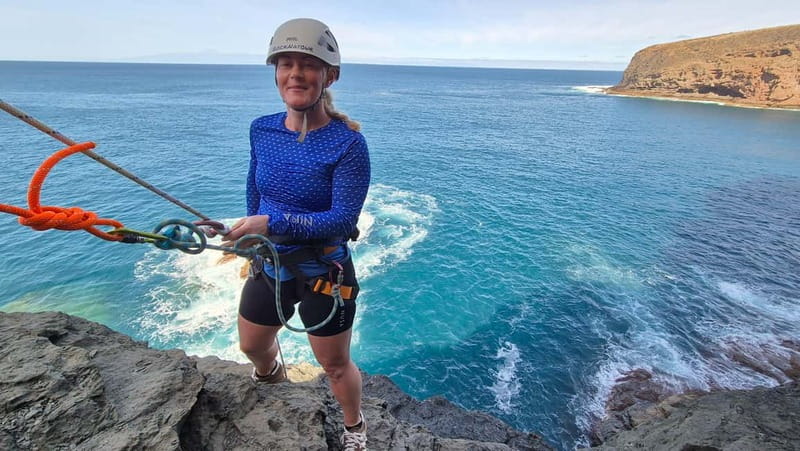
Agaete sits on Gran Canaria’s northwest side, and the coast here has that mix of cliffs, cut rock, and Atlantic texture that makes coasteering feel real, not staged. You’re not just sightseeing from a viewpoint. You’re moving through the terrain, above and beside the ocean, with hands-on gear and coaching that keeps the day active.
The route also layers in the island’s story. You’ll get explanations about the area’s geology and volcanic history during the hike, then you’ll see how that story shows up in the rocks around you. That makes the day more than a thrill ride: it turns the coastline into something you can read.
Finally, the pacing is designed around skills. You start with hiking to set your legs, then you build up to rope work, then you shift to a coastal climbing section, and only later do you fly over the sea. That order matters because your confidence grows while your body is already warmed up.
The real flow of the 5-hour adventure
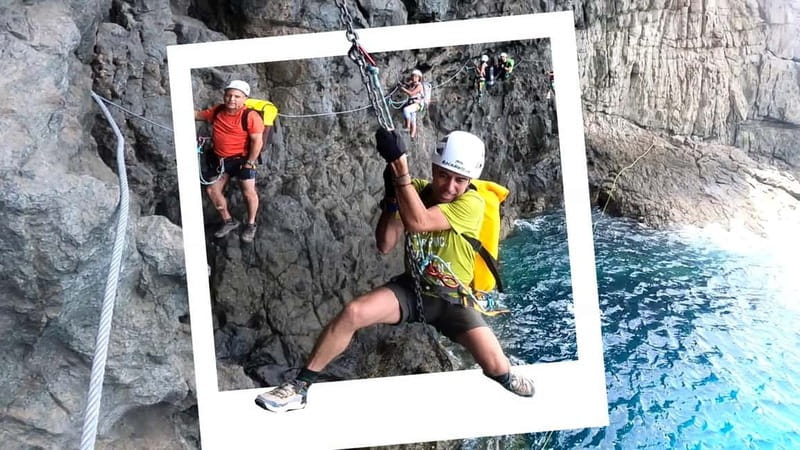
Plan for a 5-hour outing that moves in phases. You start at COMSILIENCE with a welcome and equipment, then you head out on foot. The first stretch is a hike along the cliff to a high point, where you’ll reach an ancient aboriginal cave. After that, you continue along the cliffside to the top of a rock formation with panoramic views over Agaete and a hidden beach.
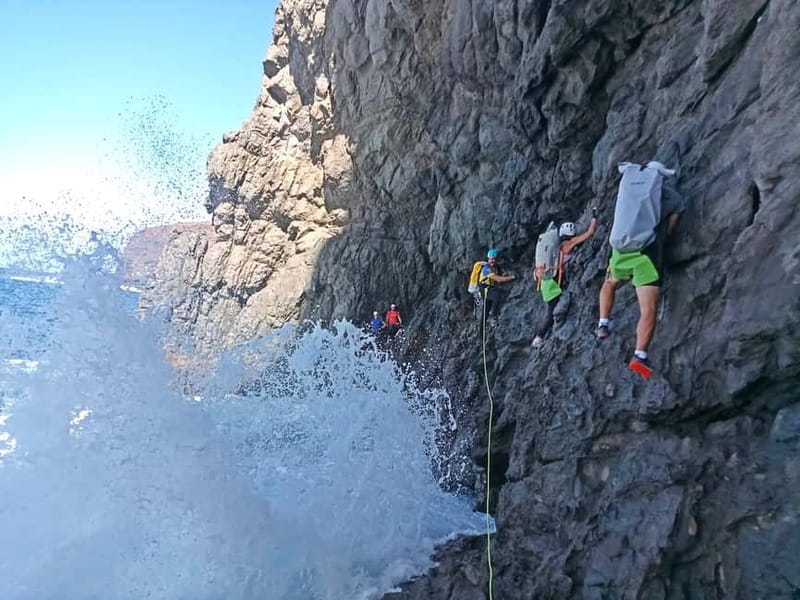
Next comes the main transition: ropes and controlled movement down to the coastline. Once you reach sea level, the route turns into climbing along the coast, including a section called the chain pass. After that, you get the big switch from “hands and feet on rock” to “hands free for flying”: a zipline that launches you 35 meters above the sea to return.
You’ll finish with a climb up the Atlantic rock with easier climbing techniques to the top, where you’re again high above the ocean. The day ends back at the starting point with snacks and a top-down view of the full line you followed.
Abseiling: the part that scares people first, then clicks
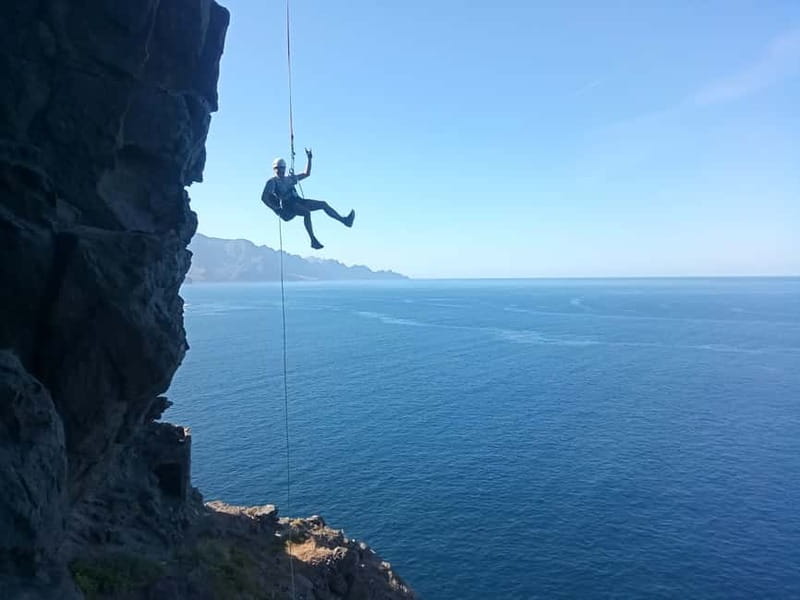
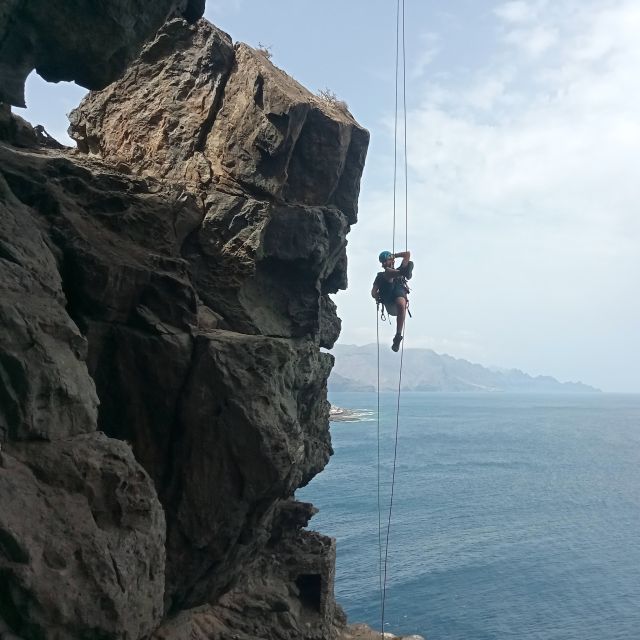
The abseiling section is the moment most people remember because you go from cliff hiking to controlled descent with ropes. What matters is how it’s handled. You’re always belayed by a professional mountain guide using a safety rope. That means your confidence doesn’t rely on guesswork.
I like that this isn’t presented as a jump-into-it test. You get a safety briefing up front, then you move step by step into technique. You’ll be working with harness and helmet, plus a wet-suit and snorkel gear along the way, so expect your body to feel bundled and a little restricted at first.
One practical tip: wear shoes that grip. The day includes wet rock and coastal surfaces, and that’s when footing matters most. Also, don’t treat it like a slow photo moment. You’ll be focused on movements, rope position, and staying balanced, because that’s how you keep the descent smooth.
The sea-level climb and the chain pass
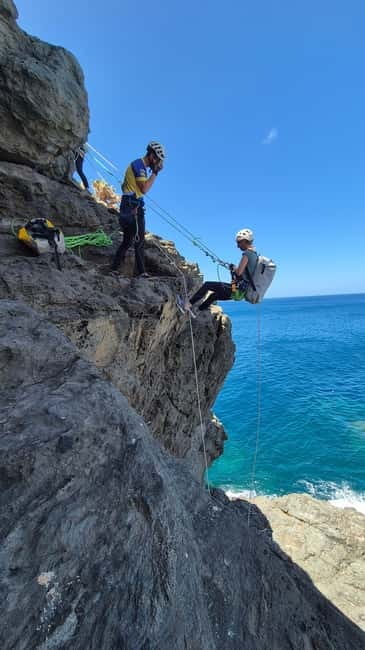
After you reach the coastline, the adventure shifts from ropes-down to hands-and-feet climbing along the sea. This is where the tour earns its marine via ferrata style reputation. You follow a climbing route that includes the chain pass, which gives you fixed elements and a clear path along the rock.
Your guide teaches the techniques as you go, which is important because via ferrata-style terrain has its own rhythm. You’re not just “climbing”; you’re using provided gear and learning how to move efficiently while staying safe near the water.
This part also sets up the emotional contrast of the day. One minute you’re handling rock and chains close to the Atlantic, and the next you’re getting ready for air-time. If you’re nervous, this is often where nerves turn into focus, because the route is guided and structured.
The 35-meter zipline above the Atlantic
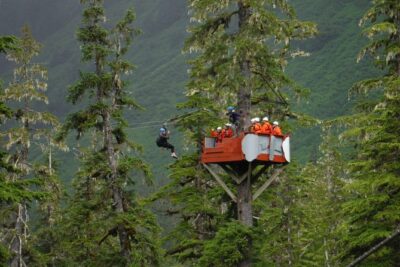
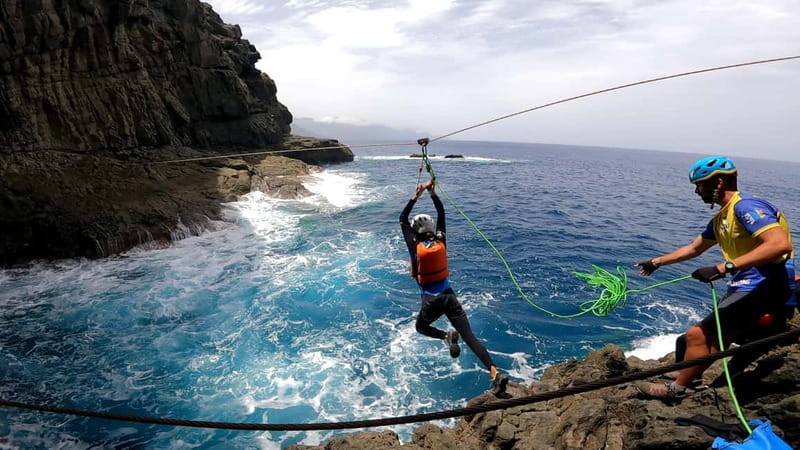
Then you get the headline moment: a zipline where you fly 35 meters above the sea and pass over the waves. This is not a short cable ride with nothing to see. You’re high enough to feel the drop, yet close enough to watch the ocean churn underneath.
I think this is the best “release valve” in the itinerary. After rope descent and sea-level climbing, the zipline gives your body a break from contact with rock. You still need to follow instructions, but you’re not doing the same technical tasks with your feet. The result is a clean change in pace: adrenaline plus scenery.
If you’re doing this for the zipline alone, you’ll still get value because it’s tied to the rest of the route. You don’t just buy a flight; you earn it by moving through the cliffs first. And that’s why it lands harder when you finally go.
Snorkeling plus wet gear: what to expect from the sea time
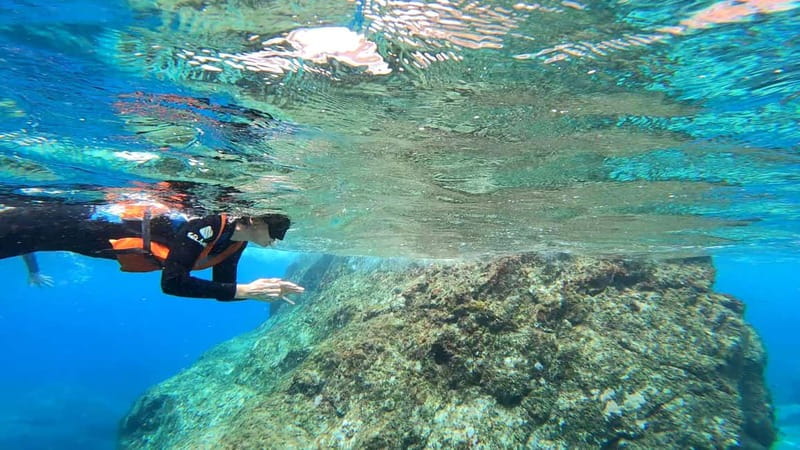
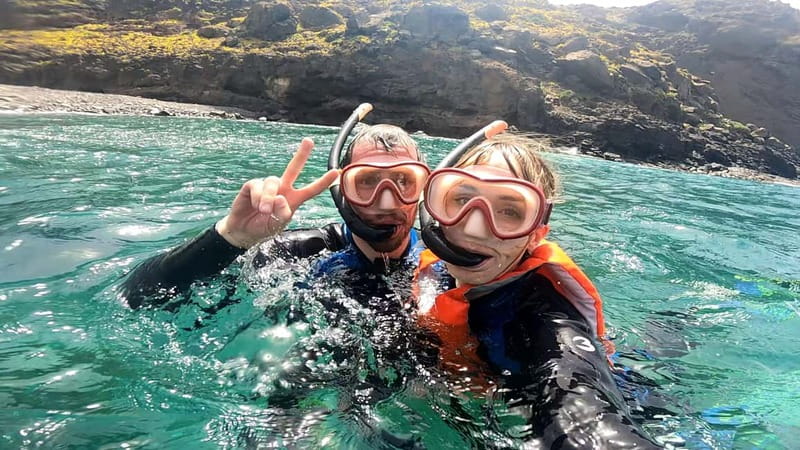
You’ll have a wetsuit and a snorkel kit provided, so you can transition from the climbing-focused portion into calmer water time. The day’s structure supports this: snorkeling comes after the via ferrata-style work, when you’ve already spent energy and your adrenaline has settled.
This is also part of what makes the overall tour feel like a full ocean experience rather than just a coastal obstacle course. You’ll get to look at the water up close and take in that contrast between chaotic surf from above and underwater life at sea level.
In practical terms: treat snorkeling like a comfort check. If you’re a confident swimmer, you’ll likely relax into it. If not, the “not suitable” rules make sense for safety, because coasteering and water time go together here.
Getting the right gear and avoiding avoidable discomfort
The tour includes the essentials: a harness, helmet, wetsuit, snorkel kit, insurance, a snack, and a free photo report. That’s good value because you’re not hunting for rental gear on arrival. It also means everyone is fitted to the same safety standard, which helps the guide manage a small group.
For what to bring, keep it simple:
- Swimwear and a towel
- Sunscreen and water
- Breathable clothing and sportswear
- Sports shoes or hiking boots
A jacket could be necessary, especially once you’re exposed on the coast. Tight clothing is ok since you’ll store what you need in dry bags, but there isn’t much space for extra layers. And skip shorts: you could scratch on rocks.
You’ll be happier if you dress for movement, not fashion. If you can, choose footwear you trust on uneven ground. That one choice changes the entire day.
Who this tour suits (and who should skip it)
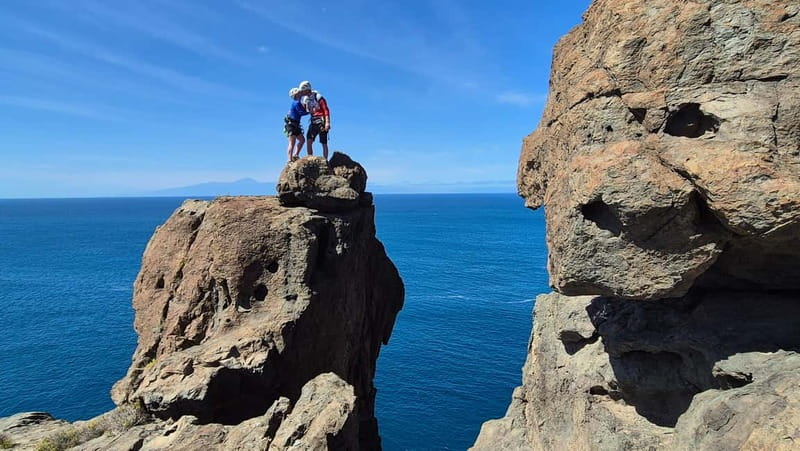
This is best for people who want real activity and don’t mind heights. You should feel comfortable with:
- repeated climbing motions and rope work
- being near cliffs and the ocean
- staying focused even when your body feels tired
It’s a small group capped at 8, and that supports first-timers and experienced adventurers alike. Many people find that the guide’s technique coaching turns fear into control, especially during abseiling.
But the rules are clear for a reason. It’s not suitable for children under 16, pregnant women, people with back problems or mobility impairments, anyone afraid of heights or with vertigo, non-swimmers, and people over 110 kg. It’s also listed as not suitable for those with low fitness and for people over 55.
If you fall into those categories, don’t talk yourself into it. This tour depends on safety systems and your ability to move and react. If heights or dizziness are an issue, choose something gentler.
Weather changes can affect the route
Coasteering is at the mercy of conditions. One important thing I’d plan for: if the weather turns, your guide may adjust what you do to keep risk down. That can mean skipping or changing the marine via ferrata and zipline parts when conditions are unsafe.
That’s not a failure of the day. It’s exactly what competent guiding looks like. If you book, go in expecting a safety-first approach and be ready for a route shift.
Is the price worth it at $81 per person?
At $81, you’re paying for more than “access.” You’re paying for a trained professional guide, insurance, full safety gear (harness, helmet), wet gear (wetsuit), a snorkel kit, snacks, and a free photo report. You’re also paying for a guided route that combines multiple technical elements: abseiling, climbing near the sea with via ferrata style techniques, and a 35-meter zipline.
If you tried to piece this together yourself, you’d likely spend a lot more on gear and instruction. Here, the value is in the package: you get coached movement, not just a ticket to an activity. For active travelers who want an all-in-one coastal adventure, it’s solid value.
Should you book Agaete Coasteering with marine via ferrata and zipline?
Book it if you want a day that mixes ocean time with cliff skills, and you’re comfortable following a guide’s safety instructions. This is a strong choice for people who like adrenaline with structure, and who want a route that feels like the best version of Gran Canaria’s coast.
Skip it if you’re chasing an easy day, you fear heights, you get vertigo, you’re not a swimmer, or you know your fitness level won’t hold up to 5 hours of active movement. Also don’t forget the gear reality: plan to get wet, wear the right shoes, and keep your outfit sensible.
If you’re on the fence, choose it for one reason: you’re not just watching the coast. You’re working it, from ropes to rock to waves, and you come back with photos and a snack, not just sand in your shoes.
FAQ
How long is the coasteering tour in Agaete?
The duration is about 5 hours.
Where does the tour start and end?
You meet at the parking close to the roundabout of Playa de Caleta (Agaete), and you return back to the starting point area.
What’s included in the price?
The tour includes a professional guide, insurance, harness, helmet, wetsuit, snorkel kit, snack, and pictures (free photo report).
Is hotel pickup included?
No. Hotel pickup and drop-off are not included.
Do I need to speak English or Spanish?
The instructor speaks English and Spanish.
Is the tour suitable for kids?
No. It’s not suitable for children under 16.
Do I need to know how to swim?
Yes. It is not suitable for non-swimmers.
Is there a height or safety restriction?
Yes. It is not suitable for people afraid of heights or with vertigo, and it lists a weight limit of over 110 kg (243 lbs).